AI Super Bowl Brings Moment of Truth for Nvidia’s ‘Chip That Will Surprise the World’
Can Nvidia respond to the rapid rise of agentic AI, which has its own hardware needs, relying heavily on the general computing power of CPUs.
Sign up for smart news, insights, and analysis on the biggest financial stories of the day.

Last month, Nvidia delivered its latest blockbuster quarter, smashing through Wall Street’s earnings expectations. The market’s reaction: an aloof, Larry David-like “eh.” Shares in the world’s most valuable publicly traded company have slid 3.3% in 2026.
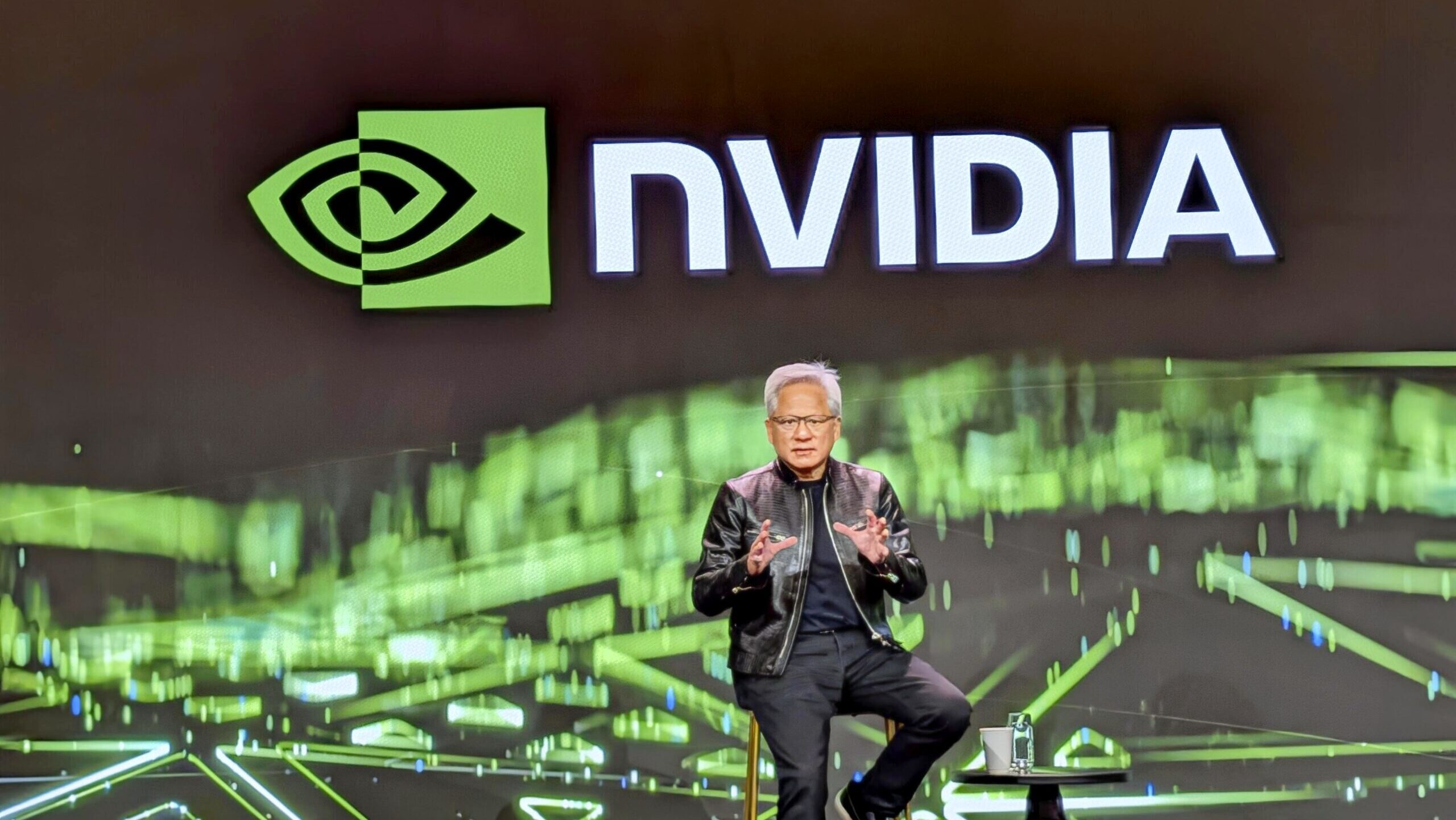
Today marks the company’s biggest chance to reignite investor enthusiasm, which has been curbed by the market’s fatigue with the AI trade. Through Thursday, the semiconductor giant is hosting the GPU Technology Conference, its annual showcase that’s been called AI’s Super Bowl. Nvidia CEO Jensen Huang, set to deliver a keynote at 11 a.m. PT today, has confidently promised “a chip that will surprise the world.”
Seeing Upside
An especially crucial factor to address in what Huang has referred to as “the largest infrastructure buildout in human history” will be AI’s changing hardware demands.
Generative AI models that respond to prompts, like ChatGPT and Claude, are primarily trained on specialized graphics processing units (GPUs), which are Nvidia’s bread and butter. But recent months have seen the rapid rise of agentic AI, which runs on its own or with limited human intervention: think autonomous vehicle technology and specialized coding agents, the latter of which sent software company shares into a tailspin earlier this year. Agentic AI also has different hardware needs, relying heavily on the general computing power of central processing units (CPUs), which aren’t Nvidia’s traditional focus. Bank of America analysts estimate the CPU market could more than double to $60 billion by 2030. Growing demand for CPUs has already created “a quiet supply crisis,” according to analysts at Futurum.
This is where Nvidia, which launched a data center CPU called Grace in 2021 and has begun producing its next-generation Vera, could capitalize. Industry watchers expect this week’s conference to see the debut of agentic-optimized CPUs, as well as CPU-only racks (Nvidia’s CPUs are normally deployed alongside GPUs). Futurum wrote that Nvidia, which struck a major CPU deal with Meta last month, is “aggressively moving beyond GPUs.” Success would contribute to some analysts’ belief that the world’s most valuable company is actually undervalued:
- “We do see an upside bias for the stock on the [GPU Conference], although it is hard to see [Nvidia] being able to provide thesis-altering commentary,” UBS analysts wrote. Their 12-month price target of $245 suggests a 36% premium over the stock’s $180.25 Friday close.
- That view is practically nihilistic compared to the bulls at Tigress Financial. Nvidia’s growth is fueled by $3 trillion to $4 trillion in AI infrastructure spend by 2030, the firm’s analysts wrote, raising their 12-month target to $360.
Forward Progress: As of Friday, Nvidia trades at 22.8 times its projected earnings, roughly the same as the S&P 500. FactSet projects the year-over-year earnings growth for the broader index in the first quarter will be 11.6%, compared with 86% in the semiconductor sector.
Recent News

-

Photo illustration by Connor Lin / The Daily Upside






-
Apple’s Product Revamp Shows Fruit of AI Comeback Strategy

Photo via Bob Henry/UCG/Universal Images Group/Newscom
-
Photo via Florian Gaertner/IMAGO/BMF/Newscom