Who Will End Up Paying for Nvidia’s Boom?
Nvidia’s performance underlines the key questions facing seemingly the entire stock market right now, both inside and outside the AI trade.
Sign up for smart news, insights, and analysis on the biggest financial stories of the day.

What’s good for Nvidia is good for … actually, finishing that sentence is a bit complicated.
On Wednesday, the undisputed semiconductor king delivered a blowout fourth-quarter earnings report: a revenue beat of $68.1 billion, up 73% year-over-year and bringing full-year revenue for its 2026 fiscal year to an astounding $215.9 billion, plus the doubling of net income to $43 billion in the quarter. And that was all without significant data center sales to customers in China.
Nvidia’s Olympian performance underlines the key questions facing seemingly the entire stock market right now, both inside and outside the AI trade.
Back to the Blackwell
From the doomster perspective, Nvidia’s booming success is only further proof of an upcoming AI firestorm that will dry up the moats protecting a wide swath of sectors: finance, law, software, media, advertising and beyond. (See also: the Citrini Substack post read ’round the world.) Others fear Nvidia’s success comes from potentially reckless spending by tech hyperscalers, in concerningly circular fashion, despite scant returns. Goldman Sachs estimates that collective AI capex this year will top $1 trillion, while Morgan Stanley says it could reach $4 trillion by 2030.
At Nvidia, the capexplosion is already manifesting in its order log, and its next-generation chips could actually cool fears of widespread overspending:
- While Nvidia didn’t announce guidance for its entire 2027 fiscal year, it did say its outlook for the current quarter is now $78 billion, plus or minus 2%. That blew past analyst expectations of around $72 billion, and soothed any remaining concerns about a short-term spending pullback.
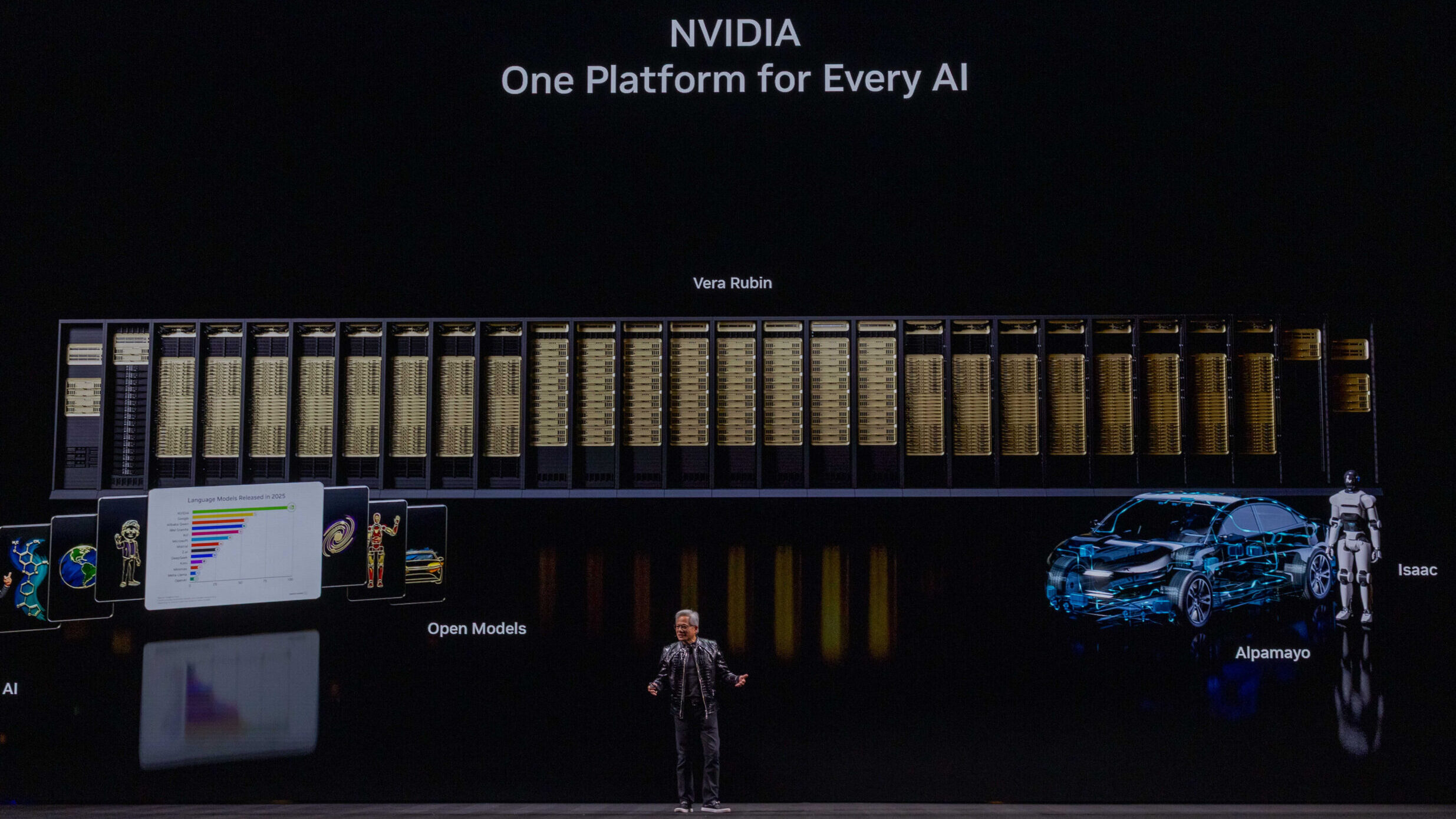
- In the second half of the year, Nvidia expects to start shipping its next-gen AI-powering chip, dubbed the Vera Rubin, which the company told CNBC on Wednesday can deliver 10 times more performance per watt than its current-gen Blackwell chips while using “much less water” to cool. AI market research firm Futurum Group, meanwhile, expects Vera Rubin chips to be priced at around a 25% markup from Blackwells.
Up, Up and Away: Nvidia shares climbed as high as 4% in after-hours trading Wednesday evening, before paring much of their gains. Shares of hyperscalers mostly dipped during the same period, while fellow semiconductor players such as TSMC and Broadcom rose. So, to finish the first sentence: What’s good for Nvidia continues to be pretty good for anyone holding semiconductor stocks. For now, at least.
Recent News
-
In CapEx Manifesto, Amazon CEO Defends Billions in AI Investments

Photo via Kyodo/Newscom