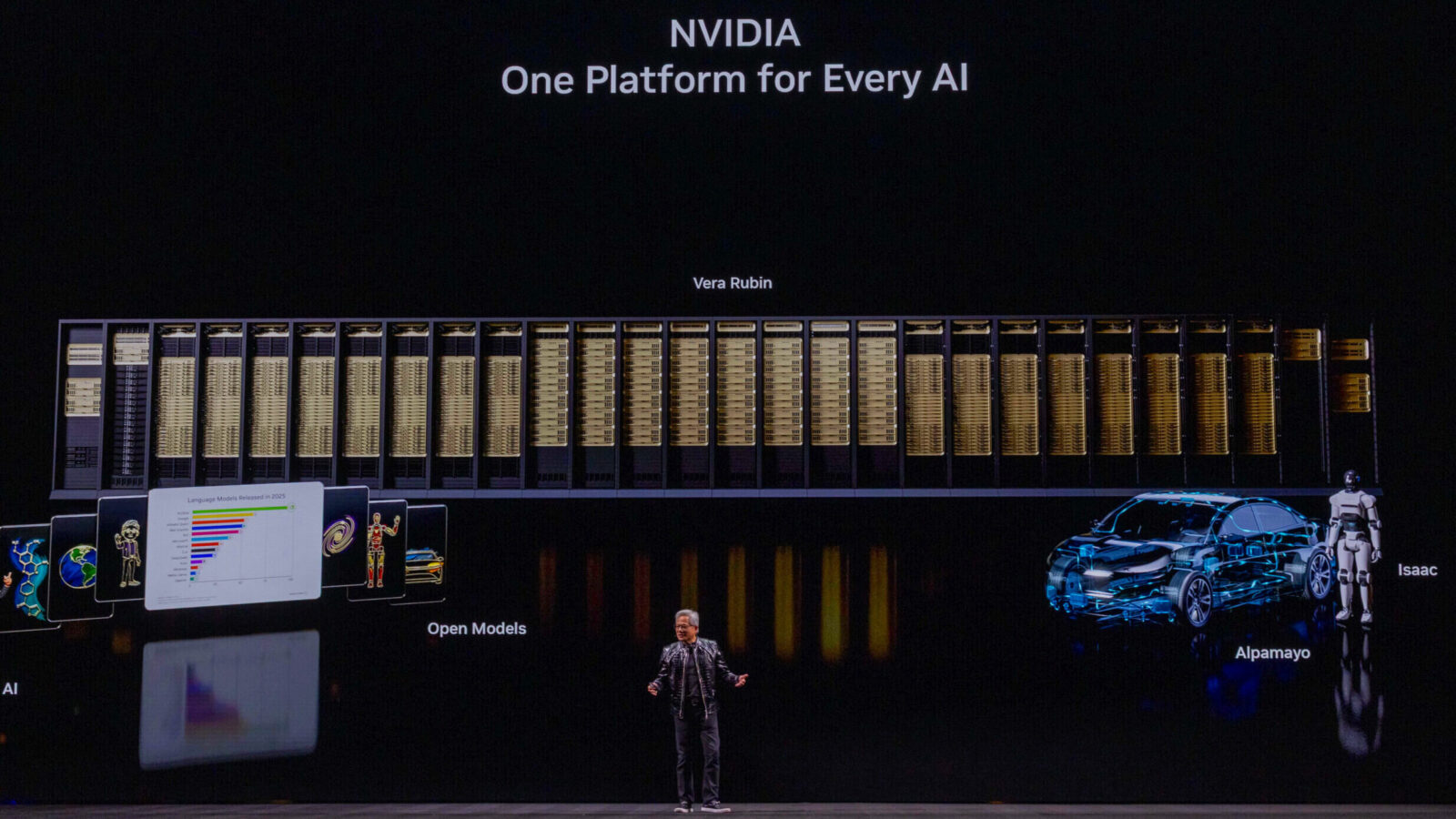
Samsung Flexes Memory Muscle in Brawl with Heavyweight TSMC for Foundry Business
Samsung’s foundry revenue recently fell 3.9% to $12.6 billion, and its market share dipped 2.2 percentage points to 7.2%.
Sign up for smart news, insights, and analysis on the biggest financial stories of the day.

Companies like Nvidia, AMD and Apple design them, but it’s the foundry companies running specialized factories that make the advanced chips powering AI.
Taiwan’s TSMC utterly dominates the sector, but Samsung Electronics may have something to say about that.
Bargaining Chips
Given the AI boom, you won’t be surprised to read that the top 10 foundry companies made a combined $169.5 billion in revenue last year, up 26.3% from 2024, according to technology research firm TrendForce. But that growth was concentrated at TSMC, where sales climbed 36.1% to $122.5 billion. The Taiwanese firm’s market share rose 5.5 percentage points to 69.9%. In a very distant second-place, like an NFL offensive lineman racing Usain Bolt, was Samsung Electronics. Foundry revenue at the tech subsidiary of South Korean holdings giant Samsung fell 3.9% to $12.6 billion, and its market share dipped 2.2 percentage points to 7.2%. Samsung’s foundry business has struggled to sign up customers because of poor yields, a term for the percentage of chips it produces that aren’t defective (last year, Korean daily Chosun Ilbo reported Samsung foundry yields as low as 50%, compared with TSMC’s more than 90%).
But Samsung’s foundry business may have found an ace card: High Bandwidth Memory (HBM). Top-of-the-line AI chips, such as those from Nvidia and AMD, require substantial memory bandwidth to support large-scale training and complex inference. While TSMC doesn’t make its own branded memory chips, Samsung does. That includes its advanced HBM4, released this year, amid a growing memory chip shortage. That shortage has opened a lane for Samsung to assert itself in the chip supply chain: It leapfrogged Micron for second place in the HBM market last year and, in the fall, announced plans to build a new factory with Nvidia that will have HBM capacity. And now, Samsung is reportedly using its advantageous position in the memory space as a bargaining chip for foundry business:
- Last week, Samsung agreed to supply more HBM4 to ADM, which desperately needs the memory to keep up with rival Nvidia’s massive memory orders. As part of the deal, the two will explore whether Samsung’s foundry can manufacture next-generation AMD chips.
- In addition, the Hankyung business daily reported last week that the Korean firm is also poised to supply HBM4 to OpenAI later this year, representing its third-largest memory order after Nvidia and AMD.
Texas, Not Just for Tortilla Chips: Samsung Electronics said last week it plans to invest $73.5 billion in facilities and research this year, a 21.7% year-over-year increase, as it tries to win more major AI chip customers. Notably, it plans to begin mass-producing AI chips for Tesla at its growing semiconductor compound in Taylor, Texas, in the second half of 2027, as part of a $16.5 billion deal.
Recent News
-

Photo illustration by Connor Lin / The Daily Upside

-

Photo via Bob Henry/UCG/Universal Images Group/Newscom -
Photo via Florian Gaertner/IMAGO/BMF/Newscom