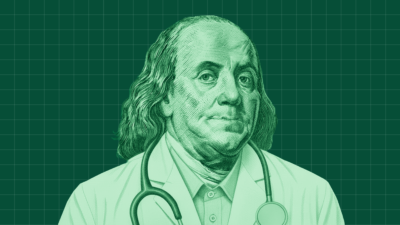
Clients on GLP-1s Are Making Weighty Financial Decisions
More than half of those on weight-loss medications worry about choosing between paying for the drugs and their retirement, and many expect their advisors to guide them.

Sign up for market insights, wealth management practice essentials and industry updates.

Here’s the skinny.
More than half of those using weight-loss medications like GLP-1s say they fear having to choose between paying for the drugs and saving for retirement, according to a recent survey from the Nationwide Retirement Institute. That includes 14% who have already started contributing less to their retirement goals and 14% who have taken money out of accounts to afford medications. The numbers are a reminder for advisors to have ongoing conversations with clients about their health, since healthcare costs are some of the hardest expenses to predict in retirement.
“The question I teach advisors to ask to open up the conversation is: ‘Tell me what you do to take care of your health,’” said Dr. Carolyn McClanahan, a physician and CFP at Life Planning Partners. It’s a nonjudgmental question and allows advisors to gauge where their clients are at. “I want to plan for who you are, not who you want to be.”
Health Is Wealth
The health benefits of weight loss mean that clients on weight-loss drugs may live longer than they otherwise would. That means planning for a longer retirement, but it’s not a zero-sum game. “If people are better able to have better health outcomes in retirement, that means maybe it’s a little bit of an expense now, but we’re also avoiding more serious issues down the road,” said Marguerita Cheng, CEO at Blue Ocean Global Wealth. “I cannot take credit for this mantra, but I live by it: ‘Too many people spend their health to gain wealth, only have to spend their wealth to regain their health.’”
Data from the Nationwide report show changes in how people view retirement and long-term care, for better or worse:
- The survey noted 59% said the health benefits of GLP-1s make them feel less pressured to save for retirement, while 57% said they’re less concerned about needing additional health or long-term care insurance.
- Still, another 59% said they worried about being able to afford GLP-1s in retirement — and the same amount also said they expected advisors to guide them on the financial implications of being on the drugs.
Healthy Skepticism. Still, with the realities of America’s healthcare system, clients can’t just write off the possibility of increased healthcare costs in the future, especially as more employers move to end coverage of weight-loss drugs. “Our healthcare system is very broken, and we don’t know what it’s going to look like in the future,” McClanahan said. “Even though you’re living healthier, it doesn’t mean your healthcare expenses are going to go down. It just means you’re going to have them longer because ideally you’re going to live longer.”
Recent News

-

Photo illustration by Connor Lin / The Daily Upside








-
Photo illustration by Connor Lin / The Daily Upside