Dimensional’s David Booth Discusses the State of ETFs, Investing and More
The asset management industry has come a long way since Dimensional Fund Advisors was founded by a small team of academics at the University of Chicago.
Sign up for market insights, wealth management practice essentials and industry updates.
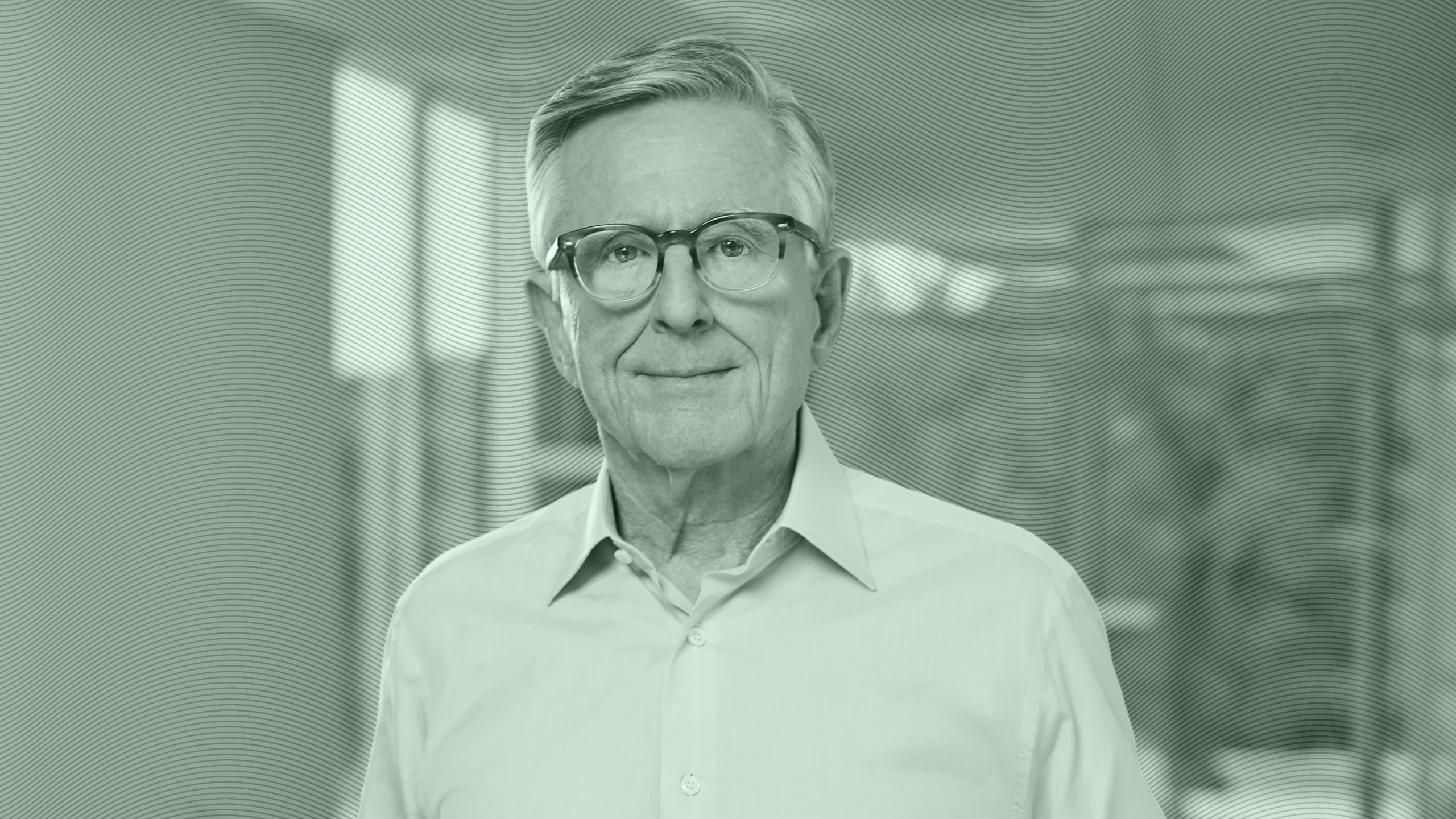
He doesn’t get as much media attention as Larry Fink or Bill Ackman, but David Booth, chairman of Dimensional Fund Advisors, has played a foundational role in the creation of the modern asset management industry. Working alongside Rex Sinquefield since the early 1980s, Booth has championed the idea that academic research is superior to Wall Street intuition.
During that time, Dimensional has grown from a fledgling business operating out of a spare room of Booth’s Brooklyn brownstone to a global investment manager with $1.1 trillion in assets under management. He’s no longer running the company, having passed the reins to current co-CEOs Dave Butler and Gerard O’Reilly, but Booth is still intimately involved in setting Dimensional’s direction at a time when innovation in the exchange-traded fund market and related trends are driving another sea change in how professional portfolios are built.
We sat down with Booth at Nasdaq’s headquarters in New York (a fitting location given the important historical links between the firms) to get his take on a number of hot topics affecting financial advisors and their clients today.
Dimensional’s foundation story and growth were the subject of a feature film funded by the firm and published last year by the Academy Award-winning documentary filmmaker Errol Morris. Does it surprise you that the film has notched more than 32 million views on YouTube?
Yeah, that’s really something. It’s gratifying, because our goal with the movie was also about helping more people better understand the financial markets, asset managers and how investing actually works. If they do, then they’ll feel better about participating in the market and will be better able to meet their long-term objectives, so reaching that many people was fantastic.
How are you thinking about innovation in the ETF market today? ETFs have been a big part of Dimensional’s run to $1 trillion. Where’s the market heading? Should mutual fund managers be worried?
Neither is inherently superior, mutual funds or ETFs, but it’s undeniable that ETFs have some big advantages, starting with the tax efficiency, and the proliferation of active products has just been huge in recent years. So yes, you are seeing tremendous growth on the ETF side and I expect that will continue.
The proliferation of ETF share classes is something we’ve been intimately involved in. Vanguard got the permission to do it, I don’t know, 30 years ago, but the SEC hadn’t permitted others to go down that route [Editor’s note: Vanguard’s patent on the ETF share class expired in 2023]. We thought that was a disservice to investors, so we petitioned the SEC for permission and we told everyone what we were doing. Well, something like 80 firms lined up behind us and the regulators decided to open this up last year. That’s a great thing for investors.
Another one, and it’s related, is mutual fund conversions to ETFs, where we’ve also been at the forefront. Between conversions and launches, we’re now a top active ETF manager. It’s a lot of innovation, and that’s going to continue here and across the asset management industry.
Do you get the sense that ETF innovation might be getting ahead of itself when you see the pace of filings for so many things that are made to be traded intraday and not held for longer? ETFs are increasingly being developed with themes akin to gambling.
Personally, I’ve never really thought that leverage was necessary for long-term investors. In my 57 years in this business, if there’s one common theme to all the bankruptcies and catastrophes that’ve come up, it’s leverage of some form. Now, I think there’s nothing wrong with leverage, per se, but it has to be reasonable and managed carefully. I hope investors getting into these products understand that. Some of them, I imagine, do enjoy the gambling aspect here. For these people, a small exposure to products they understand is probably fine, but it’s certainly not for everyone.
What about the question of broader participation in the private markets? There has been a big push by some asset managers in that direction, but the jury’s still out on retail investor demand.
We could spend a whole conversation on just that topic. But to keep it simple, I would just turn back to where we started. A lot of what we’re trying to do at Dimensional in our collaboration with fiduciary financial advisors is getting more people to invest at all. There are still a lot of people out there that simply don’t fully or even partially participate in the stock market. To think about getting novice investors, and even more experienced investors, comfortable with private equity, for example, is pretty complicated. I think the priority needs to be getting more people invested in public markets. Later, once they’re an established investor with some experience, sure, there may be room for an allocation to private assets.
What’s one thing you’re thinking or worried about that doesn’t get enough attention?
I would say tax-loss harvesting, but in the sense that people aren’t talking about one potential downside there. I honestly worry about what could happen during a downturn, if all these people want to go ahead and realize losses that they have been holding out on. You could almost see that turning into a bit of a vicious cycle. I haven’t really heard that possibility being discussed in the media.
Finally, we understand you just published a new book meant for end investors. What’s that about?
There are many people out there losing sleep over their financial future who have never had access to the ideas we’ve spent 50 years learning. That’s what I’m trying to fix, while speaking to people in plain English. I think the book will be a success if it can help people stay calm and stay invested for the long term. It was also an opportunity for me to share more personal stories about my own life and my parents, for example. They aren’t the stories that I would normally tell at a cocktail party, so it was really fun and meaningful to finally put the book together after thinking about it for a long time.
Recent News









-

Paul Atkins, Chairman of the U.S. Securities and Exchange Commission. Photo via Michael Brochstein/Sipa USA/Newscom.