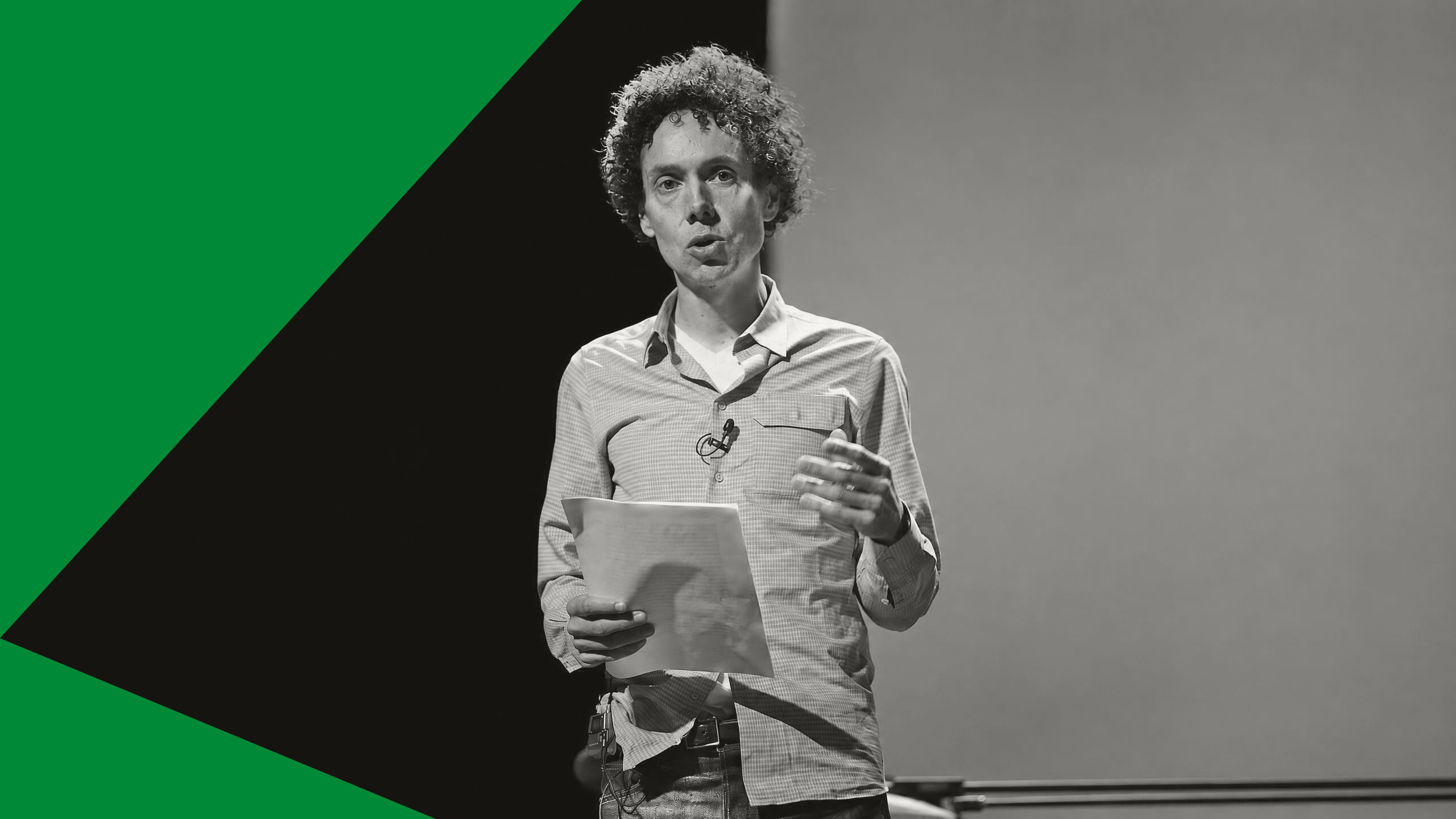
Malcolm Gladwell on What Makes a CFO an Outlier
The New York Times best-selling author gives an exclusive take on what sets exceptional executives apart.
Sign up for smart news, insights, and analysis on the biggest financial stories of the day.

If Malcolm Gladwell were sizing up a room full of CFOs, he might start by thinking about basketball.
In his 2008 book “Outliers,” Gladwell looks at how upbringing and opportunity helped shape the success of people like Bill Gates and the Beatles. CFO Upside put a follow-up question to him: How do you become an outlier among your C-suite peers when intelligence, accolades and a track record of delivering results are already table stakes?
Gladwell went into how 41-year-old LeBron James has a deeper reservoir of talent than the players around him, but what makes him an “outlier among outliers” is how he puts that talent to work. He thinks about how he practices and takes care of his body in terms of where his team needs to go, and Gladwell said he sees something similar in the best executives.
“The outliers among outliers are not solving five problems all at once,” he told CFO Upside in a sit-down at the World Business Forum on Nov. 5. “It feels like they’re solving one problem.”
Gladwell said the best executives he’s met with have “found a way to kind of integrate all of the challenges they face into one.” For a CFO, that might mean treating a sales shortfall and a planned expansion as part of the same decision. If sales stay below plan, what can the company cut to keep its investment and stakeholder sentiment on track?
From the outside, that CFO might make the job look easier. Gladwell’s point is that some of the hardest work happens before anyone makes the call. It’s up to that top-tier executive to figure out how to “turn multiple challenges into one challenge.”
“The most successful people, the most compelling people, are all people who have a clear vision,” Gladwell said. That’s a tall order for CFOs and their fellow executives, who have to make sense of competing demands and still, as Gladwell put it, “chart a kind of clear course.”
A Martian’s View of Leadership
In his work, Gladwell has used imaginary Martians to ask what an outsider would make of how Americans run youth sports. When asked what the same visitor might make of the executives running America’s Fortune 500 companies, Gladwell figured the Martians would be impressed.
“I think they would marvel at how difficult their jobs have become,” he said. “It’s not 1955 anymore,” he joked, recalling a time when executives were “knocking off four cocktails at 4 o’clock in the afternoon.”
Gladwell pictured the Martian analyzing an auto executive in Detroit. “You just have no clue about how many cars you’re going to be selling five years from now,” he said. Gladwell figured the Martian would be “pretty impressed by how well people are doing under the circumstances.”
Where the next crop of executives gets to practice making those calls is another question entirely. When asked how future finance leaders will learn the job as AI takes over some of the grunt work that once trained today’s business leaders, Gladwell thought back to his early years as a journalist.
“That is a hugely important question, and I don’t have a good answer to it,” Gladwell said. He thought back to his time at The Washington Post. “These are all skills that I learned in a pressure cooker in my 20s,” he said. “And if someone doesn’t have that kind of formative experience, I don’t know how they get to the next level.”
Gladwell sees a similar problem in law, a profession whose training pipeline he’s questioned before. In a 2019 episode of his podcast “Revisionist History,” he tried his hand at the LSAT, ran out of time and wondered why law schools put so much stock in speed.
Here, he raised a question about what happens after law school. “How do you produce elite lawyers if no one’s doing the scut work of an associate?” Repetitive as that work can be, he said, it’s where junior lawyers “get your reps and establish a base of practice and knowledge that you exploit later in life.”
Gladwell thinks employers will have to balance “the kind of slower, messier process of human apprenticeship” with what AI can deliver in seconds.
Dad’s Tipping Point
Gladwell has kept his family life extremely private throughout his career, but he was refreshingly candid about how becoming a father changed the way he thinks about his work and what CFOs who want to be great executives and great parents can take from his experience.
“We have to understand that our children are going to live profoundly different lives than ours,” he said. “Their life expectancy is not going to be 85. It’s going to be 125, or 150. God knows.”
Gladwell detailed how he thinks we could find ways to “hack old age” in the next 30 years. In the future he imagines, his kids could have several careers and might still be working at 90. That’s why, he said, he puts so much stock in their ability to adapt.
“Maybe that means that then they shouldn’t be in a hurry to kind of figure out what they want to do,” he said. For CFOs-turned-parents who’ve spent much of their lives trying to get ahead, giving their kids room to take their time may be its own challenge.
By the time Gladwell became a father, he had reported for The Washington Post, written for The New Yorker and become the bestselling author of multiple books. Fatherhood, he said, makes him think differently about what all that work was for. “It clarifies the purpose of work for me,” he said.
“The model I would like to present to my children is that my work is something that gives me meaning and joy,” Gladwell said. He thinks about what they see when he’s working at home and what they hear when he talks about his job. “That’s the model my own parents left for me,” he said, “and that was enormously useful.”
What the Kids Saw: In his own work, Gladwell said he looks for something similar in the people he writes about. “I always respond to people who are enjoying themselves,” he said. He wants to know what they see in the work that makes them want to show up. “What problem are they solving that kind of animates them?” It’s the sort of question he’s spent a career asking other people, and now he thinks about what his kids would learn from watching him answer it.
Recent News
-
What’s Cooking With Campfire’s Pending CFO Role?

Photo via Campfire




-
My Code’s CFO Puts a Price on Cultural Relevance
Photo via Ying Miao