Exclusive news and analysis of the rapidly evolving ETF landscape, built for advisors and capital allocators.
For investors with a higher risk tolerance, a standard ETF portfolio may not cut it.
Our daily email brings you smart and engaging news and analysis on the biggest stories in business and finance. For free.
A backlash to so-called woke investments spurred interest in their anti-woke counterparts. But is it a new strategy or just marketing hype?
With the continent’s active ETF industry set to balloon to $1 trillion within the decade, stateside managers are joining the fray.
Not since the pandemic have US gold ETFs seen such demand, with geopolitical and economic uncertainty driving people to the safe-haven asset.
Financial services firms could test uses for AI in “regulatory sandboxes,” according to legislation introduced last week.
Wealthier people are less likely to value financial advice, but there are consequences to trading ETFs outside of advisory relationships.
The agency approved in-kind redemptions for spot Bitcoin and Ethereum ETFs last week, but the move may just the beginning for Atkins’ SEC.
Consistent income and returns that mute market highs and lows are what an aging population demands from an ETF, the company says.
Bitcoin, Ether and other crypto ETFs are no longer limited to cash transactions — they can use in-kind creation and redemption.
BlackRock and Vanguard have raked in cash in very different places, highlighting some of the differences in their ETF customer bases.
Wall Street giant Goldman Sachs has emerged as the lead market maker of the $34 million Capital Group US Large Growth ETF.
The faith-based ETF segment focuses less on generating alpha and more on adhering to religious principles and values.
The world’s leading beverage company plans to add a cane-sugar version of its namesake beverage in the US.
Broker-dealers have a big problem with ETFs: A lack of revenue-sharing to support commission-based compensation.
ETFs attracted $58 billion in assets last month, the lowest since April 2024, according to Morningstar Direct.
The category of leveraged single-stock ETFs is growing quickly as issuers crank out risky products designed for day traders.
Little bitcoin remains to be mined, and the fixed supply may help prices to double this year, according to one firm’s target.
Anxious investors are looking for potential hedges during all the economic uncertainty and issuers are going to deliver.
ETF issuer Simplify is cutting six funds, part of a trend driven by a rise in ETF launches across the industry.
The VistaShares Target 15 Berkshire Select Income ETF has attracted assets quickly, reflecting interest in the company that it focuses on, which has dramatically outperformed this year.
The funds, also known as tail risk ETFs, are designed to do well when the market drops but underperform in the long run.
Last week, Amplify launched two Bitcoin funds that seek to deliver monthly income through weekly call options.
The launch of PRIV was called a watershed moment in February, but has garnered little interest from investors since.
Low costs, a flight from active mutual funds, and tax efficiency have boosted assets in US-listed active ETFs.
Spot ETFs are a sign that a cryptocurrency is earning a place in traditional investing. Futures are a start.
Expect less attention on Wall Street firms and more on greenlighting alt products with Chairman Paul Atkins leading the agency, experts said.
Not required to be disclosed, index licensing fees create a thin layer of fog over the transparent investment products.
There’s a glut of new ETFs, but they may not be a great fit for most investors.
Think you’re too cool for model portfolio school? Many advisors are responding by channeling Ben Stiller’s Zoolander: “You aren’t.”
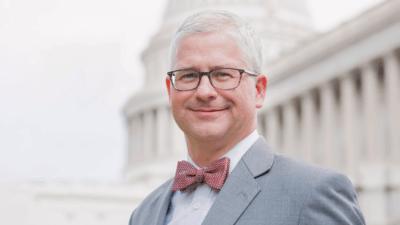
Patrick McHenry joins the firm after 20 years in Congress, the last two of which he served as the chair to the House Financial Services Committee.
A couple of the latest ETFs on the market are from an Anabaptist asset manager. Surveys from faith-based firms show that religious clients want to hear about options from their advisors.
An iShares ETF caps individual holdings at 3%; it isn’t the first to skew allocations away from the largest companies.
With volatility rising, advisors are scrambling to find both protection and returns, but answers are scarce.