USCF May Be Up for Grabs After Marygold Sale
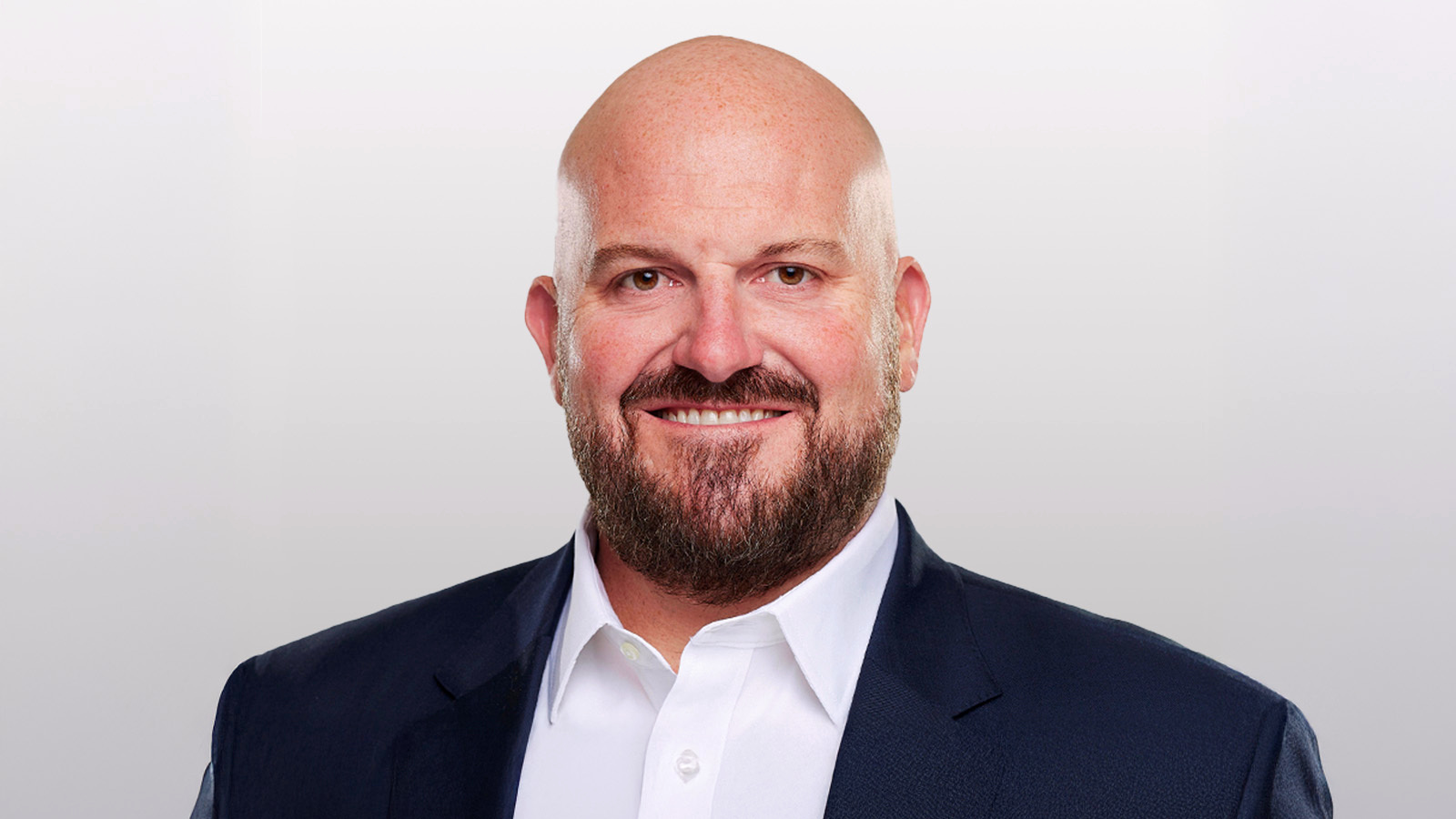
Simplify Asset Management, which has made multiple bids for Marygold, said it was approached by Marygold’s incoming CEO about a potential deal for USCF Investments after the larger entity is acquired by Madison Dearborn.

Sign up for exclusive news and analysis of the rapidly evolving ETF landscape.

You can’t always get what you want.
Such is the case with Simplify Asset Management, which has been bidding for ETF issuer USCF Investments and its owner, Marygold Companies, to no avail. Madison Dearborn, a private equity company, disclosed on Sept. 25 a deal to buy Marygold at $2.00 per share, intended to close in the first half of 2027. Days later, Simplify announced that it had offered $2.25 per share, which it then raised to $2.40 per share on Sept. 30. Marygold didn’t accept those offers, but Simplify got its attention.
Simplify’s CEO Paul Kim said he was approached that day by Marygold’s incoming CEO, Tim Rotolo, to gauge his company’s interest in buying USCF, Marygold’s ETF issuer, after the deal with Madison Dearborn closes. ETF Upside viewed text messages and call records that appear to support this.
“Why is somebody selling the business before they’ve actually bought the business?” Kim told ETF Upside. “I think it was a prearranged transaction that was rushed through, and the legal structure was structured so that it checks the bare minimum to get a transaction done, and I don’t think it was a process run to maximize shareholder value.”
Marygold and Madison Dearborn did not respond to requests for comment. Rotolo, who was named as the forthcoming Marygold CEO at the time of the deal’s announcement, declined to comment.
The Price Is(n’t) Right
Price isn’t the only metric by which to measure a deal. Seventy-five percent of Marygold’s shares are held by insiders who have favored the sale. The company said in an announcement that since a majority of the voting power backed the deal, it is not required to respond to alternative offers. “If you go to Simplify, you probably get rolled into their existing business where [with] Madison Dearborn … it seems to me that [Marygold] gets to operate as a standalone entity,” said Neil Bathon, managing partner at Fuse Research Network. “If 75% of the shares are held by people who would vote, which means the vote would go through, the board would take that into consideration.”
Indeed, Kim confirmed that the original idea was to fully merge with Marygold to achieve greater scale. “That’s the ultimate reason: Adding a related business with a lot of real blue-chip tickers into a business that wants to be a larger player in the commodities and alternative space and become more profitable by combining two relatively smaller scale properties into something that becomes a much more scaled and profitable operation,” he said.
If Marygold is also seeing interest in its other businesses (a UK asset manager, a UK financial planner, an American toiletry company and a New Zealand food company), that would also play into their decision-making, Bathon said.
Wheelin’ and Dealin’: Paying $2.00 per share for Marygold, including USCF, is “a steal,” Bathon said. At $2.40, Simplify’s offer is also an attractive price. “I can definitely see why Simplify would want to buy it there, because there’s other business lines [under Marygold] that I’m assuming [Simplify] could spin out,” he said. Simplify would then have to go through the hassle of offloading these businesses that aren’t connected to their world, but “if USCF was stripped out from Marygold as a standalone entity, it’s going to cost them more,” Bathon said.
“It would be worth dealing with the corporate actions of delisting and selling off the non-core pieces, some of which are already starting to be sold off,” Kim said. “I, as well as almost any buyer in this process, basically view the ETF business as a crown jewel, and certainly the only real meaningful part of the business.”
Last Friday, USCF filed to liquidate five ETFs: The USCF Energy Commodity Strategy Absolute Return, Oil Plus Bitcoin Strategy, Dividend Income, Sustainable Battery Metals Strategy and Gold Strategy Plus Income funds. “It’s a regular business practice these days for firms to start all kinds of products and see what might stick and get rid of them quickly if they don’t build any momentum,” Bathon said.