Brian Niccol’s Two-Year Turnaround Serves Up Sales Growth for Starbucks
The CEO’s “Back to Starbucks” plan focuses on cost savings that are partly reinvested in creating a community coffee-house vibe in stores.
Sign up for smart news, insights, and analysis on the biggest financial stories of the day.

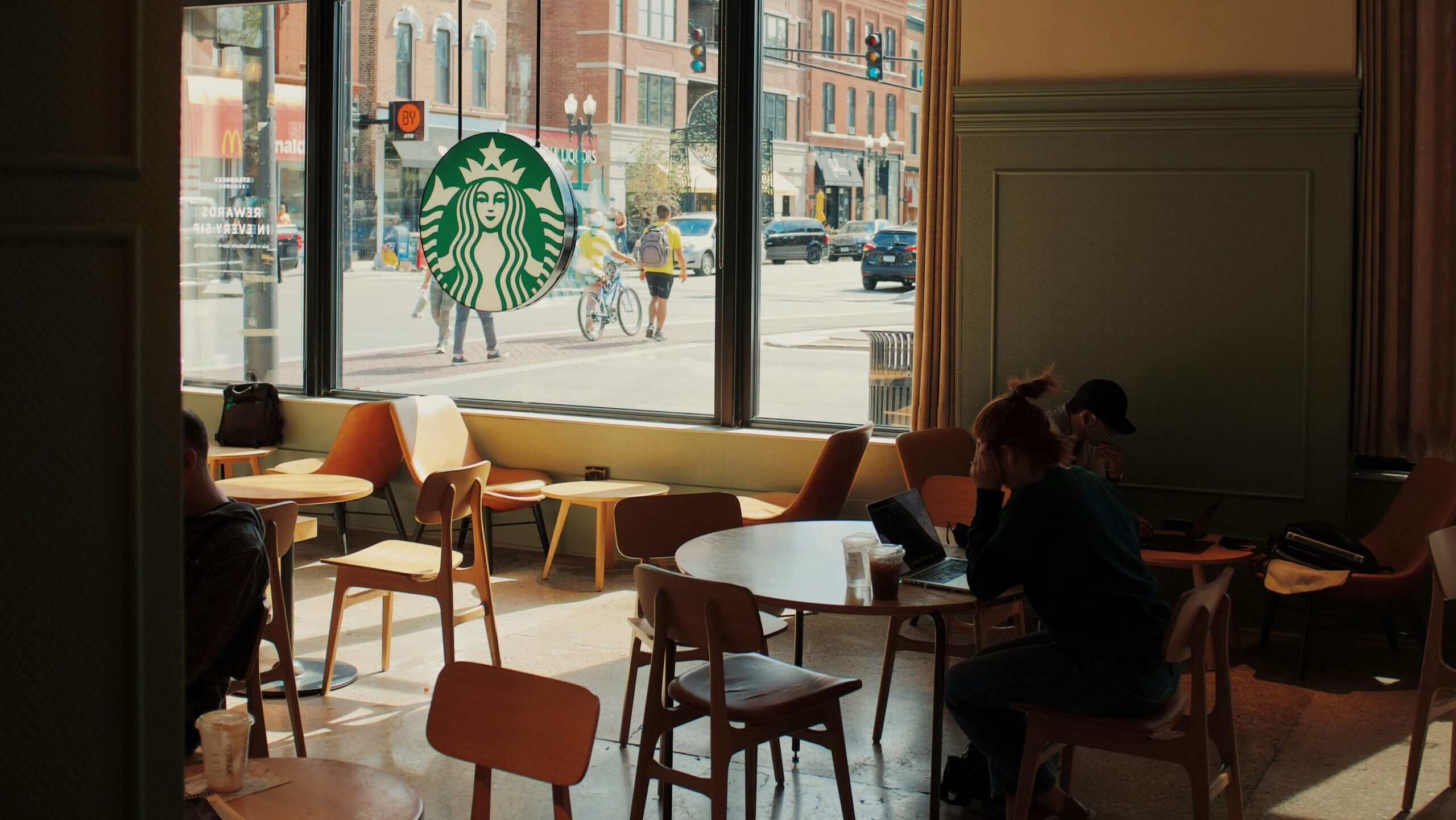
Starbucks thinks 25,000 chairs will make customers want to hang out at its stores — not just pick up their mobile orders and run. That’s among the more visible changes under CEO Brian Niccol, who told investors yesterday that “Starbucks is back” in a letter reflecting on progress on a turnaround effort he has led for the past two years.
Niccol, known for helping Chipotle recover sales after its E. coli crises, was brought in to recaffeinate the tired coffee chain, whose same-store sales were sliding globally. His “Back to Starbucks” plan focuses on cost savings that it partially reinvests into creating a community coffee-house vibe in stores, hence the chairs.
Channeling Its Inner Siren
During the pandemic, coffee chains put their cozy couches on Craigslist. And after finding success selling to-go mobile orders, some chains didn’t bother bringing them back. Rivals including Dutch Bros and Luckin Coffee leaned into the “no loitering” aesthetic and focused on fast orders, often with zero chairs or barista chitchat.
Starbucks, which has struggled in the past to churn out complicated mobile orders quickly, instead decided to go the opposite route for a “Central Perk” vibe:
- Niccol said Starbucks is targeting 1,500 uplifts by the end of this month, eventually extending to as many as 9,000 of the chain’s 11,000 corporate-owned stores. It’s spending about $150,000 per store, focusing on small renos (picture: framed paintings of sirens) rather than major changes.
- So far the plan seems to be working. Same-store sales spiked nearly 8% globally in the latest quarter, boosted by both the number of transactions and the average cost per order rising. US same-store sales have climbed for four quarters in a row.
Perking Up: Mobile orders aren’t going to stop being a major part of what makes Starbucks money. But a reputation as a fast-food drive-thru could make it hard for Starbucks to keep charging ~$6 for a Pumpkin Cream Cold Brew. And while its drink prices look palatable next to options like Blue Bottle Coffee or La Colombe, they could seem expensive compared with options at McDonald’s. So making Starbucks stores a trendy place to hang out again, like in the Frappuccino’s heyday, could act as marketing in addition to directly driving sales.
Recent News
-

Photo illustration by Connor Lin / The Daily Upside, Photos by Oleh Muslimov via iStock
-
Chobani Cashes In on Protein-Maxxing Boom

Photo via Richard B. Levine/Newscom