

Good morning.
Say hello to your new partner.
Over the next decade, the industry expects a shortage of 100,000 advisors. However, with the advent of artificial intelligence, CAIS CEO Matt Brown said there will not only be more wealth managers, but better ones, too.
“AI is not just a tool that the advisor will use,” he told CNBC this week. “It’s really going to be the partner of the advisor, carrying out activities … [providing] more leverage for the advisor to do the things that they clearly should be doing, spending time with their clients and using their judgment in complex situations.”
Just think of all the helpful AI companions that have appeared in film and television over the decades: R2-D2 and C-3PO, KITT the Pontiac Firebird, HAL 9000 … wait, scratch that last one.
*Presented by Goldman Sachs Asset Management. Stock data as of market close on October 14, 2026.
Goldman Sachs S&P 500 Premium Income ETF. Designed to deliver monthly income without sacrificing capital growth.*
Alts Goose Wall Street’s Wealth Units in Third Quarter
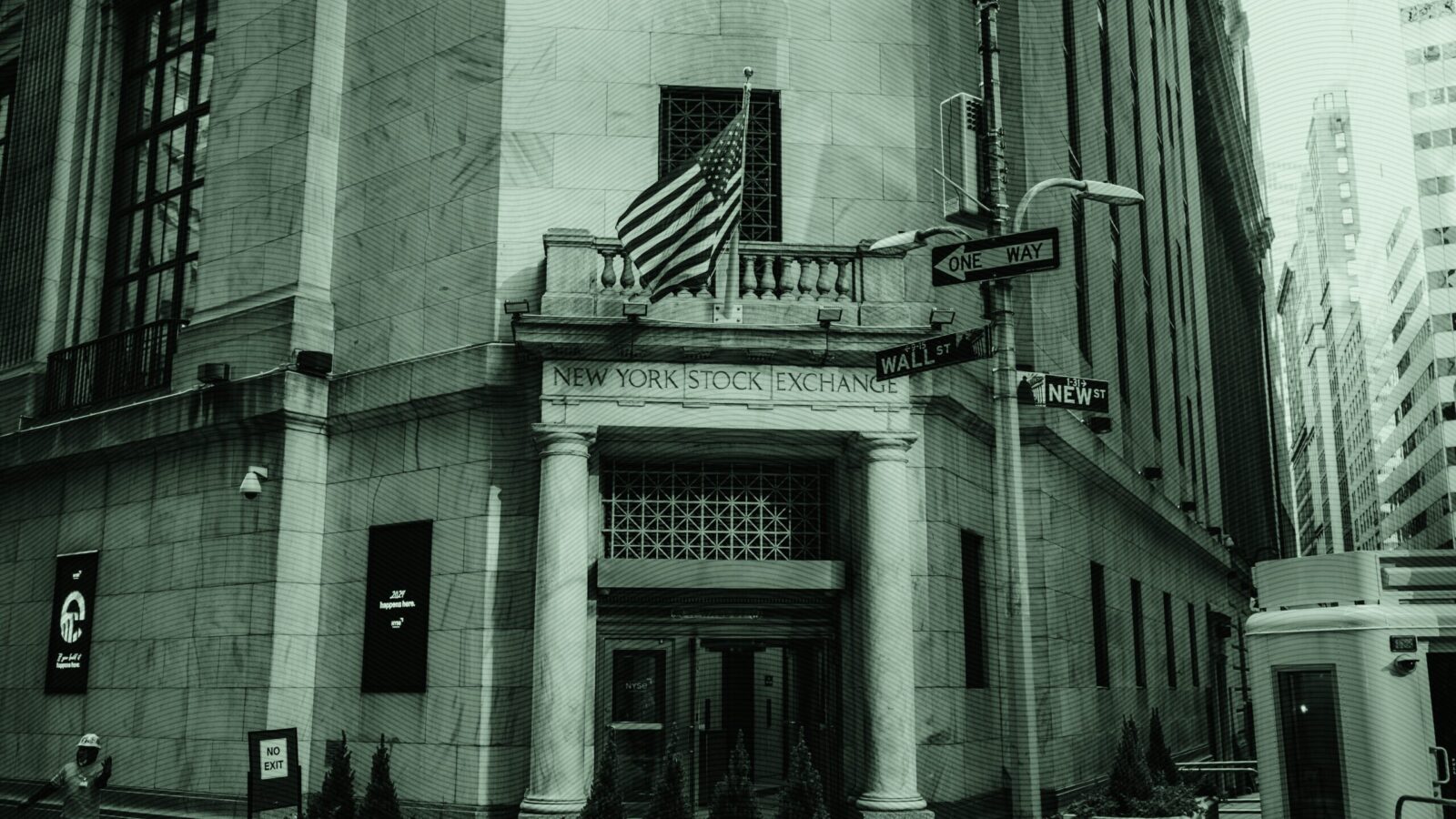
There’s always money in the wealth division.
Despite some clouds hanging over the economy — rising oil prices, a $40 trillion national debt, mounting trade tensions and a Big Mac costing $6 (Stop us, we’re spiraling!) — Wall Street’s biggest banks and investment managers have reported solid third-quarter results, with wealth management being a big part of that.
And it’s not just rising markets and higher fees. Firms are making strategic moves to attract clients and boost asset flows, with alternative investments emerging as a growth driver for some wealth divisions.
Alternative Motives
Goldman Sachs reported more than $5 billion in revenue for its asset and wealth management division, up 14% year over year. The results reflected significantly higher management and incentive fees, along with higher assets under supervision. Fees from alternative investments reached $860 million, up 43% year over year. Alternative investment assets under supervision also climbed $32 billion to a record $491 billion.
“They have an incredible ability to leverage their institutional side to deliver top-tier alternative products to ultra-high-net-worth families,” said Gabriel Shahin, CEO of Falcon Wealth Planning.
Wells Fargo reported $603 million in net income from its wealth and investment management unit, up 19% from a year earlier. CEO Charlie Scharf said on the earnings call that the bank had increased alternative product offerings on its platform by 30% this year.
“Clients are hungry for yield and noncorrelated returns,” Shahin said. “Private credit and structured products are grabbing a lot of mindshare.”
Here’s a quick look at other results from this week:
- Morgan Stanley reported record wealth management revenue of $9.1 billion and $232 billion in net new assets.
- Bank of America reported $7.1 billion in revenue from its global wealth unit, which includes Merrill Lynch, with $20 billion in quarterly AUM flows.
Living in the Citi
Citigroup’s wealth division had a banger of a quarter, reporting $585 million in net income, up 93% year over year. Client investment assets rose 15% to $759 billion.
“Citi is a behemoth, but in the wealth management space, they’re the little guy relative to JPMorgan and Wells Fargo,” said Edison Byzyka, CIO at Credent Wealth Management. A few years ago, Citi’s wealth division faced multiple headaches including executive turnover and questions about its ability to capture more of its clients’ wealth. “It was a kind of organized chaos for a time at Citi, and it looks like that ship has definitely turned around,” Byzyka said.
Missed It by That Much. In a rare miss, JPMorgan Chase, America’s largest bank, fell short of analysts’ overall earnings expectations. Its asset and wealth division, however, reported $1.8 billion in net income, up 11% year over year. AUM reached $5.2 trillion, up 13%. And client asset flows were strong, hitting $263 billion.
“When you get as big as JPMorgan and you can still generate that much in net inflows, it’s really quite impressive,” Byzyka said.
Your New Edge? The 50% Currency Hedge
Why make international investments a currency coin flip?
With Xtrackers MSCI EAFE 50% Hedged Equity ETF (EAFH), you can give clients developed-market exposure while mitigating some of the impact of foreign currency movement.
- 50% Hedge: Hedge half the foreign-currency exposure while retaining the rest.
- Historically, a 50% hedge captured 60% of the potential volatility reduction of a 100% hedge.
- Hedged exposure to 21 developed markets and a variety of industries.
Over the 10 years ended June 30, 2026, the MSCI EAFE 50% Hedged to USD Index returned 11.32% annualized, versus 9.66% unhedged.
(And if you do want a 100% hedge ratio as well, check out DBEF.)
Credentials Essential: Advisors with Extra Letters Get More Referrals
Most advisors want more referrals to high-net-worth clients. A new survey finds there’s a surefire strategy to get them.
More than two-thirds of investors (68%) who work with a financial advisor and have over $500,000 in investable assets say they are more likely to refer friends or family because their advisor holds advanced professional certifications, according to a survey from the Investments & Wealth Institute. That rises to 74% among those with $5 million.
Nearly a dozen advisors said those findings match their experience. But the bigger takeaway may be the dynamic connection between awareness of an advisor’s credentials, client confidence and referrals. The research shows that confidence is a good proxy for whether clients feel like they have a good plan in place and that their advisors have the expertise to execute on it.
“For firms trying to strengthen relationships and grow organically, that is an important measure to understand,” said Sean Walters, IWI CEO.
Warm Introductions
“Almost everyone said they are satisfied with their financial advisor, but one-third still report low or moderate confidence in their financial future,” Walters noted. “It’s striking that clients with higher confidence were about five times more likely to make referrals than those with low confidence.”
Some additional findings:
- Among clients who made referrals, 87% knew whether their advisor held advanced certifications, compared with 59% among those who haven’t.
- Among clients with high financial confidence, 75% knew whether their advisor held advanced certifications, compared with 49% of clients with low confidence.
What do advisors make of those results? “They ring true,” said Eileen Olson, founder at Emerald Wealth. “That’s one reason I love this profession. We’re expected to stay sharp in a world that keeps changing, and clients notice.”
Most advisors said they don’t lead with the letters after their names, but they’re glad to explain them, because each one tells a client something specific about how they can help. A few were insistent that credentials don’t make a meaningful impression on clients, but James Malatos, founder of Harbor View Private Wealth, disagreed.
“Credentials rarely come up in conversation, but they quietly signal competence and accountability, and the client’s confidence is what drives the referral,” he said. “The credential supports that trust in the background, but the experience of working together is what people talk about.”
Tell Your Story. For his part, Walters said advisors should be more proactive about sharing their credentials, putting the focus less on the letters and instead emphasizing what they have studied and how they stay abreast of evolving financial planning theory and practice.
“The letters after an advisor’s name can serve as a useful proof point, but their value becomes much clearer when clients understand what stands behind them and how that expertise is being applied to their own situation,” Walters said.
It’s Not Easy Being Green in the Era of AI

There’s no getting around it: Artificial intelligence comes with a hefty environmental footprint.
Sure, it can transcribe meetings, streamline workflows, help drive medical breakthroughs and create hyperrealistic images of Will Smith eating spaghetti. But AI also guzzles electricity and water, generates electronic waste and fuels a data-center boom that is straining power grids. Meanwhile, its growing use in the workplace and Hollywood has raised concerns about job losses and the erosion of human creativity.
That presents a challenge for conscientious investors. As more public companies adopt AI or build the infrastructure powering it, screening out businesses with significant environmental footprints could leave clients with fewer investment options. So what does sustainable investing look like in the age of AI?
“Avoiding every company that uses it could eventually be like avoiding every company that uses the internet,” said Michael Lofley, a CFP with HBKS Wealth Advisors. “The more useful question is how a company manages its environmental impact.”
Can’t Spell ‘Sustainability’ without ‘AI’
AI may not be the core business of the Magnificent 7 stocks — or the entire S&P 500, for that matter — but it is increasingly woven into their operations and investment plans. There’s no universal system for grading companies on AI’s environmental impact, but advisors have some resources:
- The Data Center Air Pollution Tracker evaluates whether major AI companies power their data centers with clean energy or fossil fuels, scoring them from 0 to 100. No company has anything near a perfect score. Amazon leads at 61, while xAI scores 34.
- For a broader sustainability assessment, advisors can consult the S&P Global Corporate Sustainability Assessment. However, fewer than 50 US companies made the cut in its latest report, including building-products manufacturer Owens Corning, industrial-products maker Ingersoll Rand and Host Hotels & Resorts.
When designing mutual funds and ETFs, Parnassus Investments Portfolio Manager Mark Zagata said his firm looks for board-level AI governance, serious consideration of AI-related risks and respect for shareholder concerns. He pointed to Microsoft as an example. “Microsoft is conducting full audits of their own footprints,” he told Advisor Upside. “That gives us confidence to invest.”
Knowledge Is Power. Advisors should consider investing clients in the infrastructure needed to meet AI’s growing power demands, including battery storage, geothermal and nuclear energy, said Matthew Chancey, founder of Tax Alpha Companies. “You can’t screen your way out of AI. You can only build your way through it,” he told Advisor Upside.
Extra Upside
- Them’s the Rules. FINRA said it has made substantial progress on the initiative launched last year to streamline its rules and bring them in line with recent changes in business and technology.
- Can You Take Me Higher. Core CPI came in hotter than expected on Wednesday, putting more pressure on the Federal Reserve to hike rates, just weeks after its first increase in over three years.
- Commodity Volatility = Your Next Opportunity. Geopolitics are moving markets, and every price swing creates potential upside — if you know where to look. USCF Investments helps advisors capitalize on commodity markets while mitigating risk for clients. Dial in your commodity strategy today.***
***Partner

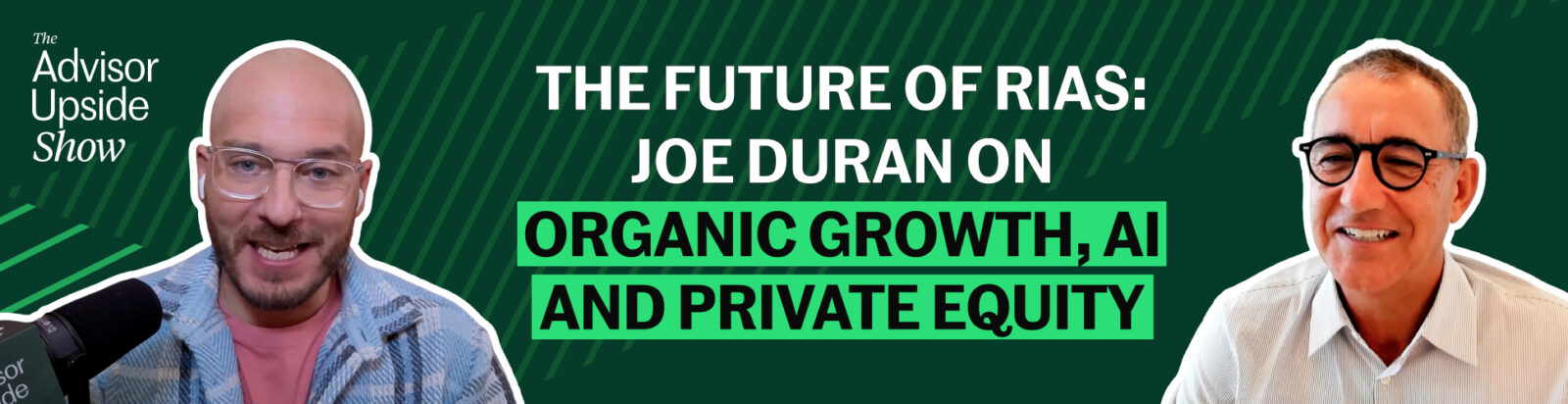
What Comes After Consolidation? Rise Growth Partners founder Joe Duran joins John Manganaro to explain why the next decade of RIA growth won’t look like the last, why brand matters more than before, and how much time advisors should really be spending on growth. Plus: his advice for firms rushing into AI.
Edited by Emile Hallez. Written by Griffin Kelly, John Manganaro, Lilly Riddle, and Quinn Waller.
Advisor Upside is a publication of The Daily Upside. For any questions or comments, feel free to contact us at advisor@thedailyupside.com.
Disclaimers
*The returns represent past performance. Past performance does not guarantee future results. The Fund’s investment return and principal value will fluctuate so that an investor’s shares, when redeemed, may be worth more or less than their original cost. Current performance may be lower or higher than the performance quoted above. Please visit our website at: am.gs.com to obtain the most recent month-end returns.
For standardized performance click here: https://am.gs.com/en-us/advisors/funds/detail/PV105258/38149W622/goldman-sachs-s-p-500-premium-income-etf.
**Xtrackers Disclosures: Investing involves risk, including the possible loss of principal. Foreign investing involves greater and different risks than investing in US companies, including currency fluctuations, less liquidity, less developed or less efficient trading markets, lack of comprehensive company information, political instability and differing auditing and legal standards. The fund’s use of forward currency contracts may not be successful in hedging currency exchange rates changes and could eliminate some or all of the benefit of an increase in the value of a foreign currency versus the US dollar. Investing in derivatives entails special risks relating to liquidity, leverage and credit that may reduce returns and/or increase volatility. An investment in this fund should be considered only as a supplement to a complete investment program for those investors willing to accept the risks associated with the fund. Please read the prospectus for more information.
Carefully consider the fund’s investment objectives, risk factors, and charges and expenses before investing. This and other information can be found in the fund’s prospectus, which may be obtained by calling 1- 844-851-4255, or by viewing or downloading a prospectus from www.Xtrackers.com. Read the prospectus carefully before investing.
Diversification does not guarantee against a loss.
Investment products: No bank guarantee – Not FDIC insured – May lose value.
Xtrackers ETFs (“ETFs”) are managed by DBX Advisors LLC (the “Adviser”) and distributed by ALPS Distributors, Inc. (“ALPS”). The Adviser is a subsidiary of DWS Group GmbH & Co. KGaA and is not affiliated with ALPS.
For current holdings and more info: Xtrackers MSCI EAFE 50% Hedged Equity ETF |EAFH.
©2026 DWS Group GmbH & Co. KGaA. All rights reserved. R-111943-1 (10/26) DBX007606 (10/27).
