PRESENTED BY

CION’s Mark Gatto on the $600B Semi-Liquid Boom, the Redemption Panic, and What Comes Next
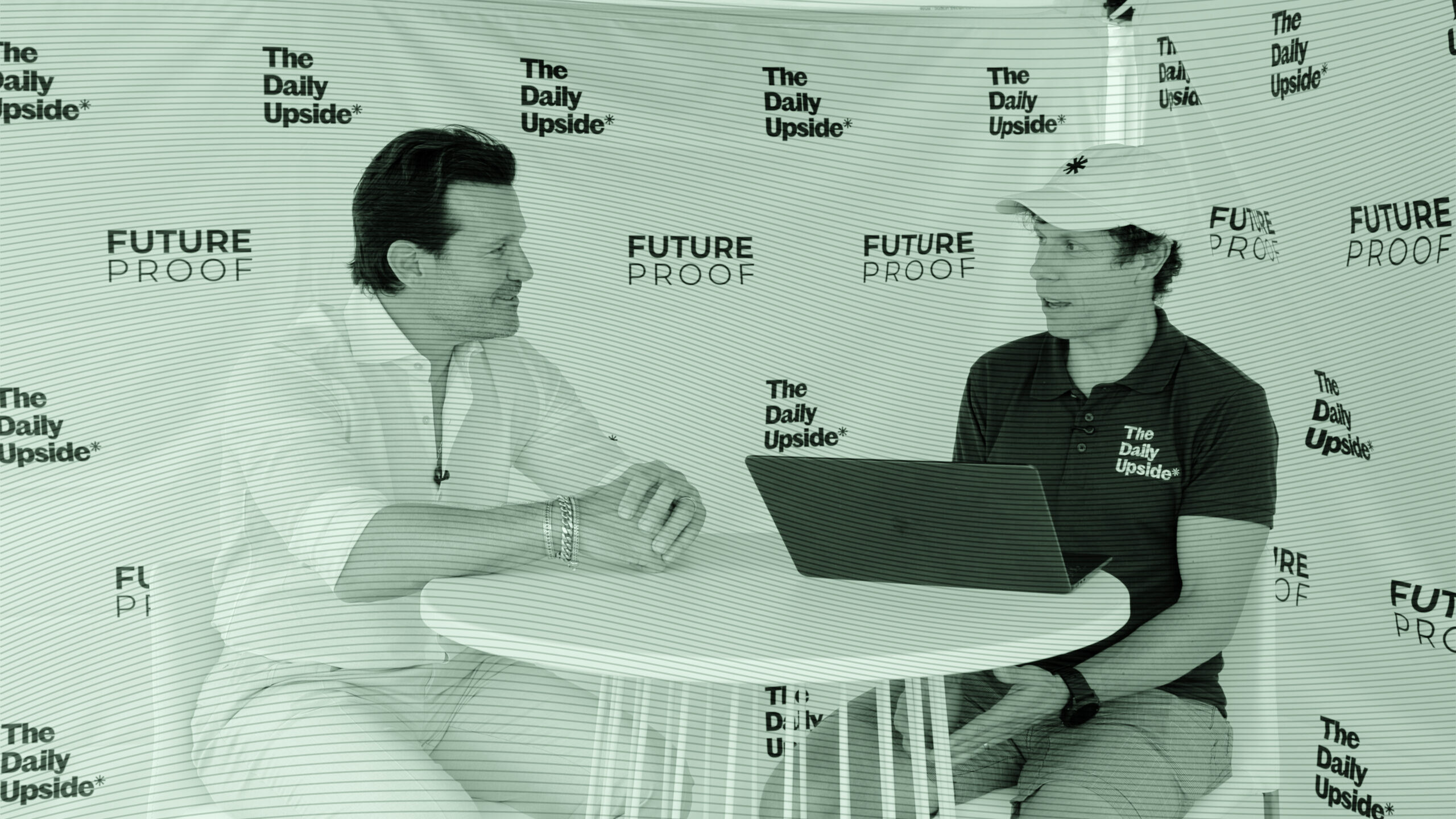
Semi-liquid funds have grown into a $600 billion category, and this year gave us a live look at how they work. We sat down with Mark Gatto, co-founder and co-CEO of CION Investments, at Future Proof Festival 2026, to talk through what it means for advisors.
The Daily Upside: Semi-liquid funds have grown into a $600 billion category fairly quickly. What’s behind that growth?
Historically, alternatives were products that were exclusively for institutions and ultra high net worth individuals. The structure really wasn’t suitable for the individual. You had high minimums, they were fully illiquid, so your money would be locked up for seven to 10 years, and they were relatively opaque.
Then you have the advent of the BDC, the business development company, you have your closed-end tender offer funds, and you have interval funds that allow individual investors in the private wealth channel to access the same exposure, but in a wrapper that makes sense for them. Low minimums, transparency because these are mostly registered products with reporting requirements, not unlike a public company, and probably most importantly, some access to your capital.
It’s not full access, and nor do you want it to be, because you want the manager to be able to invest in a way that you can capitalize on the liquidity premium and get an enhanced yield. That’s why you’re doing it. Besides traditional stocks and bonds, investors need other types of products to meet their long-term objectives.
The Daily Upside: Redemptions have been a big story this year. Is that a strain on the category, or is everything working as intended?
I think it’s a positive thing. These products were never intended to give full liquidity. That cap is really a feature.
I think it’s good that it happened now, so people understand it more. Advisors and their clients get to see how it works in practice, and nothing dramatic has happened in the asset classes. A lot of it was a function of people thinking we were in a down credit cycle, that you’d see enhanced defaults, that AI was going to disrupt everything. People panicked.
The good thing here is you couldn’t over-panic, because there was this feature. I’m not going to call it a gate or any other term the media uses. It’s a feature in these funds that believe in the long-term viability of the strategy.
The Daily Upside: When there’s a surge in redemption requests, walk me through what that process looks like.
Most interval funds provide a window to tender shares back to the fund, limited to 5% per quarter. If you get 5% or less, basically everybody gets 100% of their capital back. If you got 10% redemption requests, then everybody gets 50% of their money back. So even though a 10% request sounds like you’re not going to get all your money, at the end of the day you still got 50% of it back.
Compare that to a traditional alternative, where you have no opportunity to get any of your money out until the life cycle of the fund is completed and the manager liquidates. If you can get access to your capital, albeit limited, to me that’s a much better proposition.
The Daily Upside: What should advisors consider when they’re selecting a manager or a strategy?
Track record is important, but you have to make sure it lends itself to what they’re trying to accomplish in the semi-liquid wrapper. A manager with great returns who could sit around at their leisure and find the best deals when they were available may not be a great manager in a fund where capital’s being raised every day.
Then look at the asset mix. Are these the types of assets that work well in that wrapper? You have to give liquidity on a quarterly basis, so are they convertible to cash in a relatively short period of time? Is there a satellite strategy being used to support the tender program, and is the manager good at that satellite strategy?
And then there’s service. You need somebody who can give you the information you need to educate your client, to articulate what’s happening, to calm them down when markets are turbulent. A lot of people overlook that. They look at the manager and the track record and they stop there.
The Daily Upside: What’s next for the category?
You’re going to see another influx of product coming in, so there needs to be some sorting out of the winners and the losers. There are some really good funds and some really good managers out there, but this is not a space where everybody can hang a shingle and be relevant. What we don’t want is to blow up from a marginal manager who doesn’t know what they’re doing and have that paint the whole industry with a bad reputation.
There’s also a lot of room for growth, because there’s a whole swath of advisors who aren’t using these products currently, since they’re apprehensive and don’t really understand them. You’re going to see more education pushed into the channel, more uptake, more adoption, and then increased demand.
Recent News
-
Private Ayes: SEC Votes Yes on Proposals to Expand Retail Access

Photo via Graeme Sloan/Sipa USA/Newscom -
Decisions, Decisions: How Does One Pick an ETF?
Photo by Getty Images via Unsplash -
DeepSeek, Huawei Challenge the Software Powering Nvidia’s AI Dominance
Photo via LONG WEI/FEATURECHINA/Newscom -
Good Vibes: Robinhood CEO Says AI-Assisted, 24/7 Investing May Create ‘New Market’
Photo via CNP / AdMedia/SIPA/Newscom -
Boeing Gets Boost from Navy Contract While FAA Delays Max 10
Photo via NAVAIR -
Bill Crafted to Ease Confusion on Claiming Social Security Heads to White House
Photo by David Trinks via Unsplash -
Why the Treasury Is Cracking Down on 351 Conversion ETFs
Photo via BONNIE CASH/UPI/Newscom -
With Hester Peirce’s SEC Exit, Crypto Industry Loses an Ally
Photo via LENIN NOLLY/SIPA/Newscom -
Consumers Aren’t Buying Stable Job Market Data
Photo via Lindsey Nicholson/UCG/Universal Images Group/Newscom -
Goldman Sachs Considers Its Next CEO

Photo via Tom Williams/CQ Roll Call/Newscom