DeepSeek, Huawei Challenge the Software Powering Nvidia’s AI Dominance
Nvidia’s CUDA software suite has become the AI industry’s go-to tool for building neural networks on GPU chips.
Sign up for smart news, insights, and analysis on the biggest financial stories of the day.

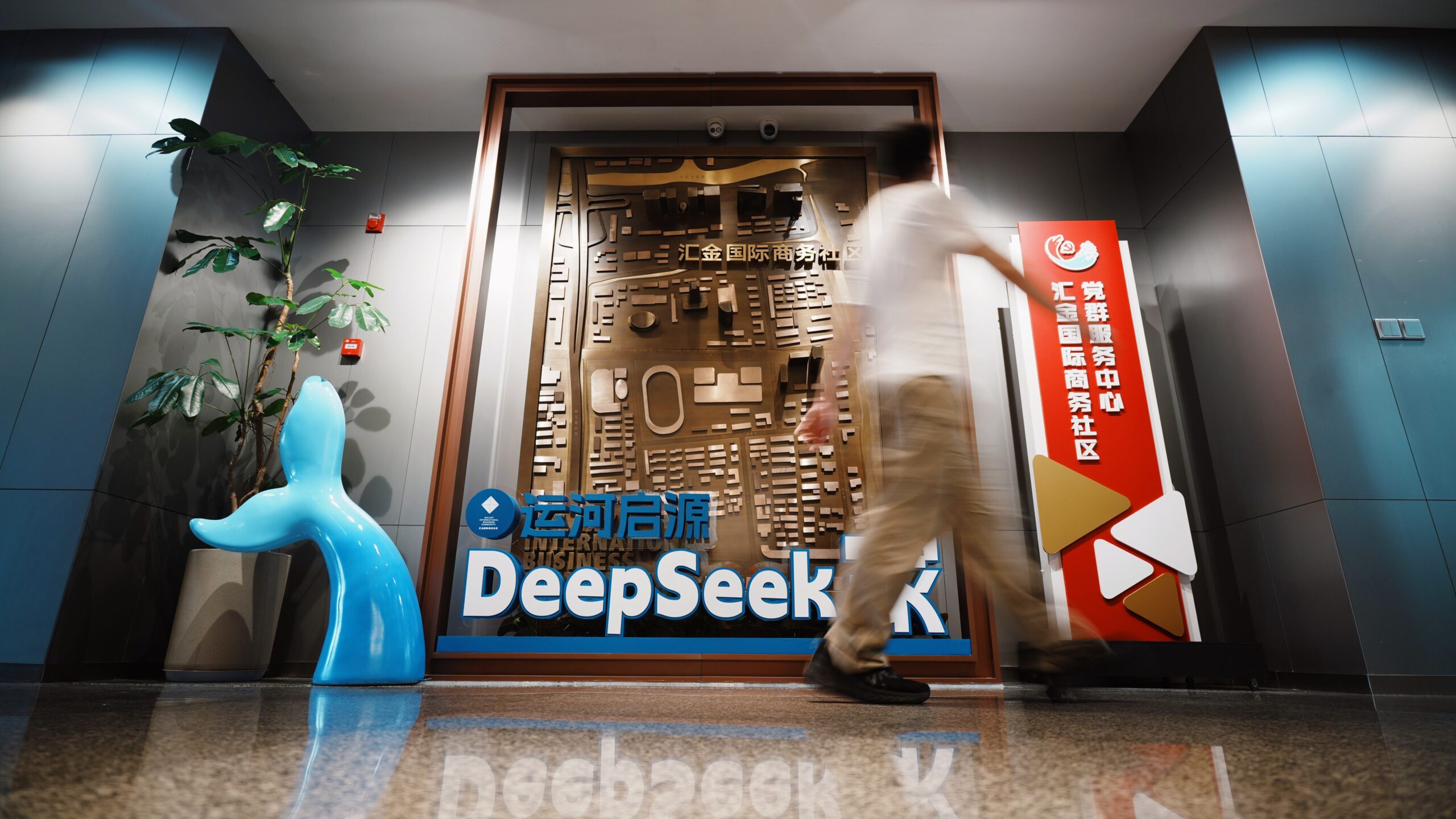
In the AI world, claiming to improve upon Nvidia’s CUDA programming interface is like saying you can beat Usain Bolt in the 100-meter. DeepSeek seems to be feeling fast, saying yesterday its new software TileLang is simpler to program than CUDA while still utilizing chips to their upper limits.
DeepSeek said the new software, which it built alongside Huawei for use on the tech giant’s Ascend chips, is now available to the public and free to download. As Chinese companies try to reduce their reliance on Nvidia, Huawei’s advancing its hardware while DeepSeek is tackling software. Huawei said this month it’s planning to release its next-gen Ascend chips early next year, and DeepSeek’s TileLang will be used to program them.
Chips alone can’t compete with Nvidia, and companies have struggled to create CUDA alternatives.
Woulda, CUDA, Shoulda
CUDA (Compute Unified Device Architecture) was a major breakthrough in parallel computing when Nvidia unleashed it in 2006, and it has become the AI industry’s go-to for building neural networks on GPU chips. Without it, Nvidia chips might still be known more for running World of Warcraft than ChatGPT. In some ways, CUDA is to Nvidia what iOS is to Apple. The software helps lock customers into using the hardware, because CUDA plays better with Nvidia’s chips than those of competitors.
DeepSeek and Huawei are far from the first tech companies to attempt a CUDA copycat:
- CUDA alternatives have been around for a decade and change. AMD’s ROCm has failed to gain CUDA’s traction among developers, as has Intel’s oneAPI. OpenCL, backed by companies including Apple, AMD and Qualcomm, also failed to break through.
- Going up against CUDA today is even more challenging, after some 20 years of building and optimizing its developer libraries and entrenching itself as the common language of AI.
Limited Impact: CEO Jensen Huang said in May that Nvidia had largely conceded China’s AI-chip market to Huawei, despite huge demand from the country. Though some less advanced Nvidia chips can be sold to Chinese companies, China has been pushing for self-reliance amid US bans. TileLang could help China further separate itself from the US and Nvidia specifically. But it doesn’t seem likely to turn many heads among the millions of developers that depend on CUDA.
Recent News




-
The Gig’s Up: Robotaxis, Delivery Drones Reshape the Side-Hustle Market

Photo illustration by Connor Lin / The Daily Upside, Photo by Chanakon Laorob via iStock