Can Alibaba Become a Serious Hyperscaler?
Alibaba says it plans to operate more than 20 gigawatts of data center capacity by 2032, roughly equivalent to China’s total capacity today.
Sign up for smart news, insights, and analysis on the biggest financial stories of the day.

No TSMC, no Nvidia, no problem. Or so says Alibaba.
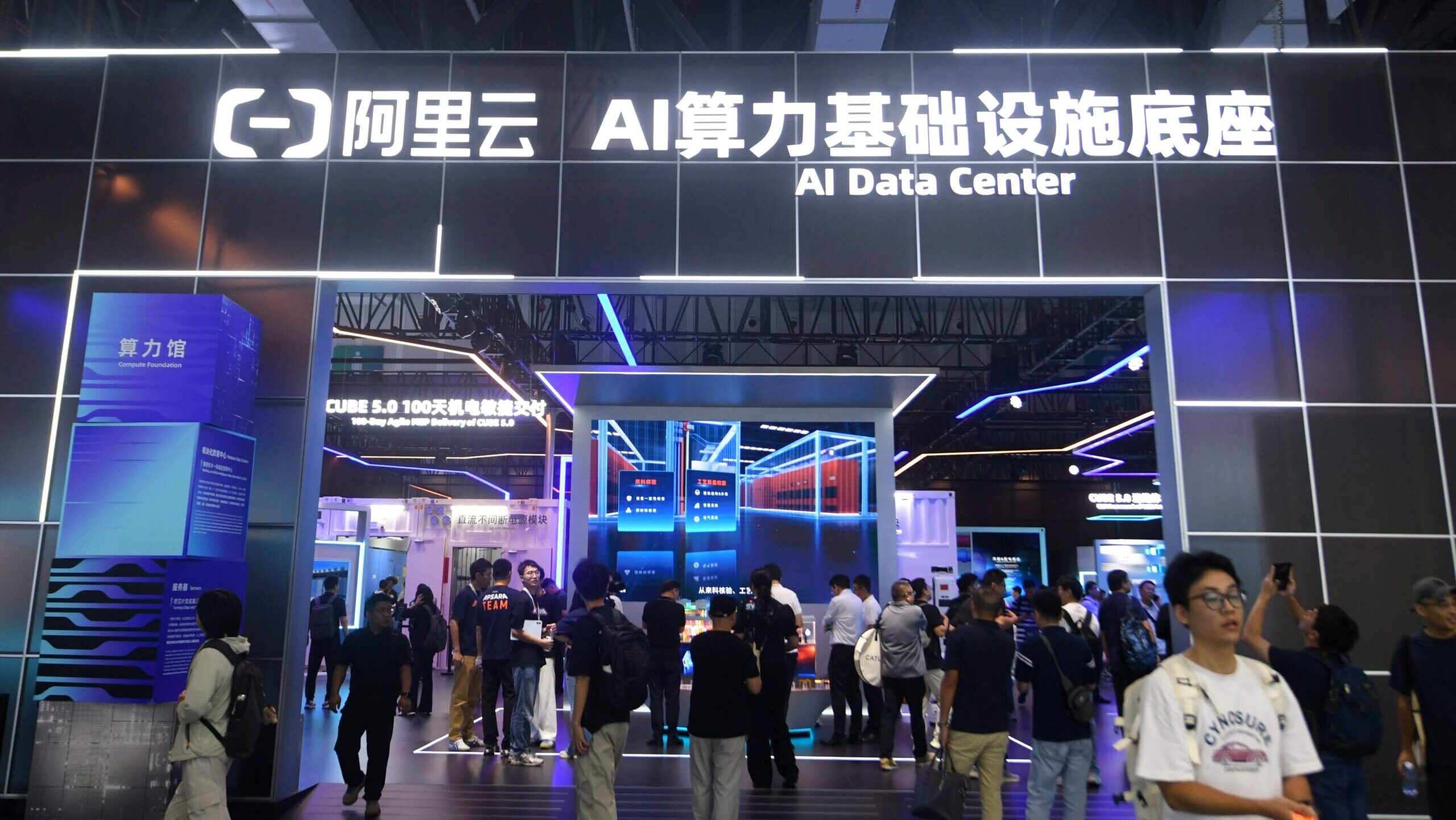
At its annual flagship Apsara Conference in Hangzhou on Tuesday (and on the eve of the summit between US and Chinese leaders), the Chinese tech giant unveiled its latest in-house AI chips, which it said are three times more powerful than the current generation. Next up? Alibaba says it’s hyperfocused on becoming a hyperscaler, with plans to operate more than 20 gigawatts of data center capacity by 2032.
Gigawatt Are You Talking About?
For context: There were about 82 gigawatts of global data center capacity at the end of last year, according to a McKinsey report published in June. China was home to about 20 gigawatts, while the US was home to about 36, per the report. And while US hyperscalers tend to keep their own capacity quite opaque, Bloomberg reported earlier this month that Microsoft, a leading hyperscaler, currently operates about 12 gigawatts worth of data centers, with plans to expand to 38 gigawatts by 2032.
In other words, Alibaba’s big push may bring it into the Big Leagues, but only barely. Then again, massive capacity or not, data centers are only as good as the chips inside them:
- The company’s newly unveiled chip, the Zhenwu V900, is slated for mass production and commercial release in the first quarter of next year.
- Still, Alibaba says it’s a big upgrade from its last chip, the Zhenwu M890, which it released in May. According to most experts, that chip has been used as a domestic substitute for Nvidia’s H200 chip, which is only available to Chinese companies in specific cases; Nvidia has now made two new generations of chips since the H200, with a third launching soon.
Trade Deadline: Closing the tech gap will be crucial for Chinese AI firms. US Trade Representative Jamieson Greer has made clear that easing export controls on cutting-edge semiconductors will not be on the table as Chinese President Xi Jinping meets with US President Donald Trump this week in Washington, though it does seem there’s some mutual interest in establishing AI safety guardrails. At least everyone can agree that a non-zero chance of human extinction is in no one’s best interest.
Recent News
-
Meta’s Muse Inspires Double-Digit Rally for CPU Stocks

Photo via Meta

-
Say Hello to the New CEO. Where Will John Ternus Lead Apple?
Photo illustration by Connor Lin / The Daily Upside, Photo via Chelsea Blair/Sipa USA/Newscom
-

Photo via Simon Shin / SOPA Images/Sipa USA/Newscom