Meta Keeps Muse Momentum as Rivals Push New AI Models
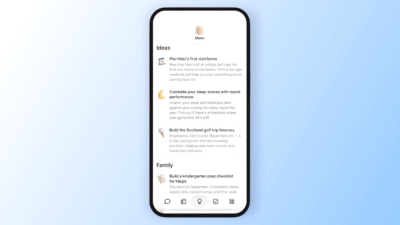
Muse’s app has racked up 2.5 million downloads since its September 8 debut, according to Sensor Tower data.

Sign up for smart news, insights, and analysis on the biggest financial stories of the day.

OpenAI and Anthropic tried to crash Meta’s party this week but got turned away at the door.
Both of the companies that have led the AI revolution released new, cheaper AI models Tuesday. OpenAI’s two new models, GPT-6 Sol and Luna, are part of the company’s tiered system: Sol, built for complex tasks like coding, is a step below the most advanced model Astra, while Luna handles repetitive clerical tasks and is a level below Sol. OpenAI says the latest versions of the two models cost 50% less. Anthropic’s Claude Opus 5.5, meanwhile, is the most powerful version of the Claude lineup and comes with a cost cut compared to its predecessor.
They’re no competition for Meta’s Muse, but that’s because Meta isn’t trying to play the same game.
An AI Agent Made for Normies
Meta had been largely written off in the AI race, as its models lagged behind rivals in terms of their ability to quickly handle complex tasks. Then Meta decided to drop out of the race to become the most powerful model. Instead, Meta and a freshly put-together team of AI experts recruited from rival companies designed a product that’s made for everyday people, not Eli Lilly or the Department of Defense.
The advantage of starting from behind is being better able to size up the competition ahead, and identify any gaps they may be missing. Meta has done just that with its consumer-facing agent:
- Muse is the first publicly available AI agent built by Big Tech. But before Muse, OpenClaw proved that people wanted a personal AI agent to order their groceries and organize their calendars. The vibe-coded one-off became the fastest-growing project on developer platform GitHub as devotees donned lobster hats and claws. Meta’s head of product in its AI sector acknowledged Tuesday on X that OpenClaw “heavily inspired” Muse.
- But while OpenClaw was cumbersome to set up and use, requiring users to manually input text scripts, Muse is made for people who didn’t major in computer science. Basically, Meta pulled a Snapchat on OpenClaw, taking a popular concept (Stories in Snap’s case) and tweaking it for wider appeal. Muse’s app has racked up 2.5 million downloads since its September 8 debut, Sensor Tower found, more than Claude and Grok during the same period.
Torment Nexus Debate: Meta has been pulling ahead as the wider industry slows down. Anthropic pushed back its IPO to November amid warnings that AI could go Terminator mode on humans in the not-too-distant future. OpenAI on Monday proposed new safety and security standards the industry could adopt. Even Nvidia CEO Jensen Huang said in a podcast that any dangerous AI models should be shut down. Amid the clamor, Meta CEO Mark Zuckerberg stood by Muse, saying it was rigorously tested before release.
Recent News



-
-

Photo illustration by Connor Lin / The Daily Upside, Photo via Chelsea Blair/Sipa USA/Newscom


-
Uber, Waymo and Tesla Speed Toward Driverless Future

Photo via Uber/Avride

-
Photo via Simon Shin / SOPA Images/Sipa USA/Newscom