Guggenheim Calls Time on SaaSpocalypse Fears
Guggenheim analyst John DiFucci argued Wednesday that the most pessimistic view of sotfware stocks should be considered “a hallucination.”
Sign up for smart news, insights, and analysis on the biggest financial stories of the day.

Arguably the most bearish forecast on markets this year has been that artificial intelligence will render software stocks fossils. The “vibe coding” enabled by tools like Anthropic’s Claude Code and OpenAI’s Codex, this view holds, will serve as a metaphorical asteroid to the digital dinosaurs about to be wiped out in a SaaSpocalypse.
Guggenheim analyst John DiFucci argued Wednesday that, like a chatbot’s misfired answer, this pessimistic view is “a hallucination.” Software firms, he said, are “one of the best opportunities for patient investors” and, at least for a day, investors came around to the idea that the prevailing sentiment might be overblown.
Apocalypse Not Now
Fear that AI will make traditional software offerings obsolete has been a leading motivator for investors in 2026: The iShares Expanded Tech-Software Sector ETF has tumbled 12.4%. At the same time, the Nasdaq Composite, an indicator of the broader technology sector’s health, has climbed 12.2%. A rise in redemption requests in the private credit industry, which has led some overwhelmed funds to cap withdrawals, has been partly driven by investors’ concerns that they’re too exposed to software firms.
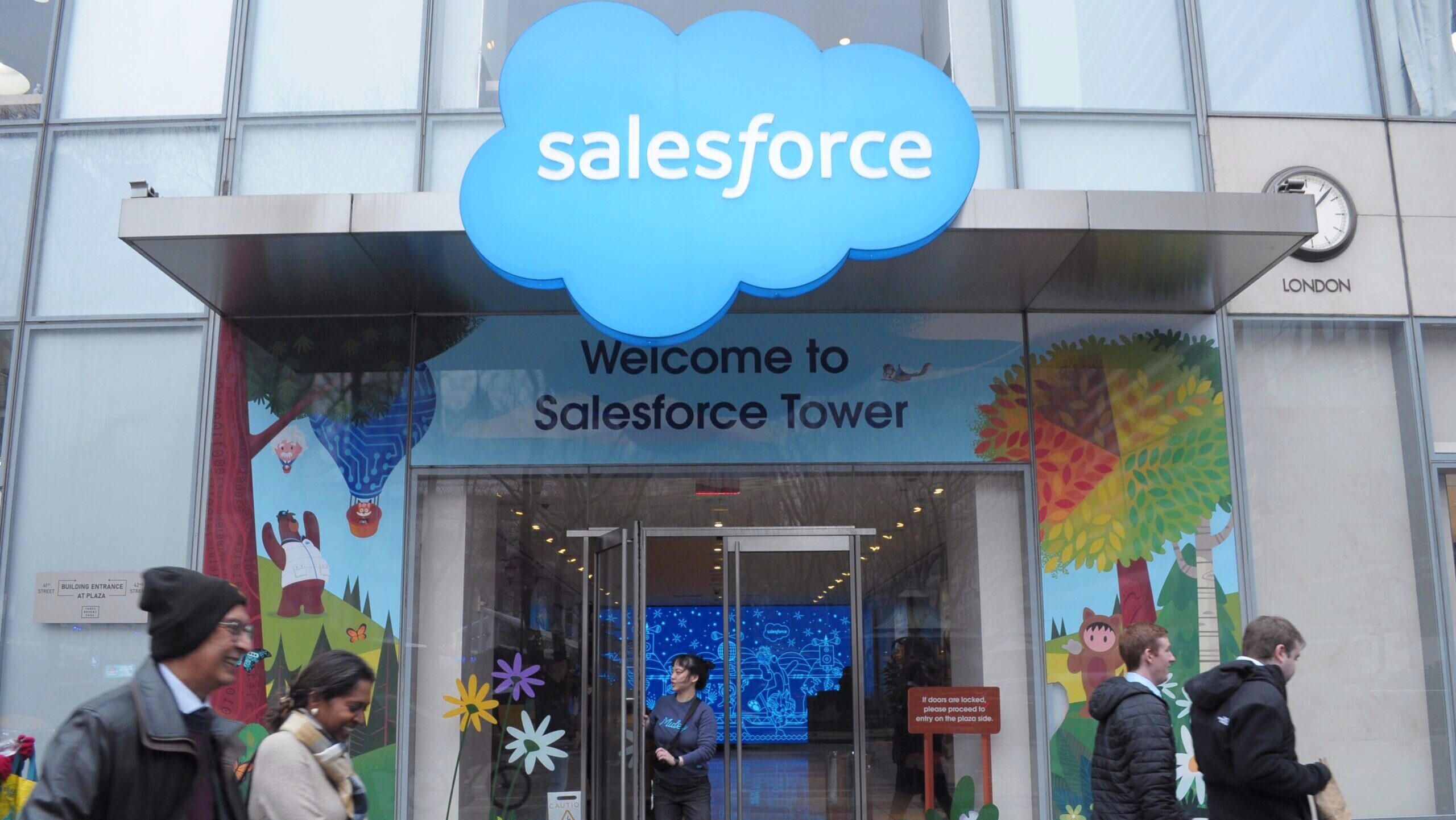
DiFucci said the deep selloff has reached the point where it has created a buying opportunity. “Valuations imply many software companies will decline into perpetuity because of AI,” he wrote in an investor note. “We don’t believe that to be true.” He upgraded software firms Check Point Software, Salesforce and ServiceNow, and their shares rose 2.9%, 4.2% and 6.6%, respectively. Check Point is trading at 12.6 times its forward earnings, and Salesforce at 11.5, significantly lower than a year ago and well below the Nasdaq Composite’s average of 23.2. ServiceNow’s 23.7 forward price-to-earnings ratio is a fraction of the 62.1 a year ago.
- While DiFucci acknowledges AI represents a “technology paradigm shift,” he made the simple argument that there “is significant staying power in enterprise software. If a company is using it to help run its business, it will continue to use it.’”
- For this reason, he said Guggenheim believes software firms will “at least persist (if not continue to grow at reasonable rates in many instances); they’re trading as if they will not, making for one of the best opportunities for patient investors in our careers.”
Trading Up: The software sector benefited from turbocharged spending by companies that adopted work-from-home policies during the pandemic, leading to a corrective slump in recent years. DiFucci said if revenue growth stabilizes, companies “currently trading as if they’ll decline into perpetuity” will “trade as if they’ll at least be stagnant, if not grow modestly into perpetuity.” Guggenheim’s $188 target price for Check Point and $228 target price for Salesforce both imply a roughly 40% upside from Wednesday’s close. Its $128 target for ServiceNow implies a 21% upside.
Recent News
-
Does Smart Ring-Maker Oura’s Delayed Debut Mark an IPO Tipping Point?

Photo via Oura Ring

-

Photo illustration by Connor Lin / The Daily Upside, Photo by Chanakon Laorob via iStock







-
Meta’s Muse Inspires Double-Digit Rally for CPU Stocks
Photo via Meta