Alibaba Surges as Cheaper AI Undermines US Dominance
Alibaba’s applying a uniquely Chinese playbook in its efforts to win the world’s AI-ttention, and its flagship model is now number one.
Sign up for smart news, insights, and analysis on the biggest financial stories of the day.

Bada bing, $BABA boom. Alibaba’s shares surged last week after an earnings update that turned the heads of investors already starting to rotate toward Chinese AI.
The climb, the Hong Kong-listed stock’s largest since September, created an updraft that buoyed rivals including Baidu, Tencent and JD.com. At the same time, US tech stocks had a rocky week, with the Nasdaq losing steam midweek before leveling out later. Nvidia’s $1 trillion wipeout saw the stock trading about 17% off its May record before bouncing back.
Alibaba’s applying a uniquely Chinese playbook in its efforts to win the world’s AI-ttention.
Qwen You Believe It?
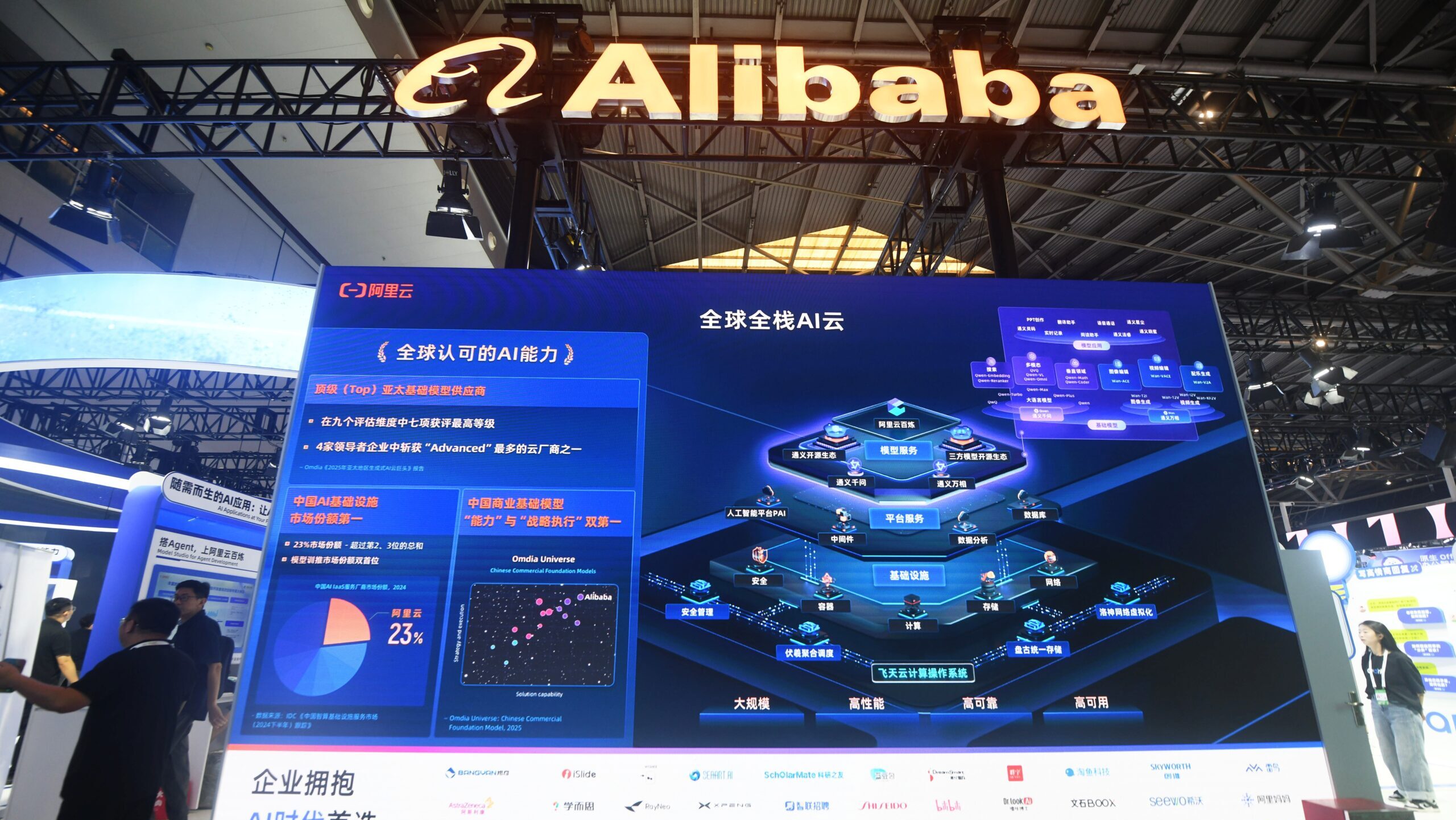
Alibaba’s an “everything” company similar to Amazon. And while Alibaba’s e-commerce biz is lagging behind cheaper, homegrown rivals, its infrastructure is helping position it to lead the AI race. The company built vast networks of data centers to process customer data and expanded into cloud computing (similar to Amazon), giving it the technical groundwork needed to make and run an AI model.
Alibaba has also torn a page out of its e-comm playbook to gain AI market share:
- It’s using aggressive marketing, including spending $431 million this Lunar New Year on giveaways (picture: big red envelopes) to incentivize people to download its Qwen AI app. At the same time, the tokens needed to run Chinese AI models like Qwen cost significantly less than those of US rivals.
- The strategy worked. Qwen has become the world’s most downloaded AI model, and so many US firms are using Chinese models now that a House committee investigation is looking into the potential risk associated with US biz tango-ing with China’s tech. Lawmakers have sent letters to Cursor and Airbnb about their concerns. Beijing may be on board: Reuters reported that China is looking into restricting overseas access to its top AI models.
Second’s Best: China’s AI models are advancing rapidly despite restrictions on tech that’s needed to create top-tier chips (mainly, lithography). And even if Chinese companies struggle to rival leading US models technologically, their cheaper per-token prices could pull away enough users to hurt US dominance. But winning the war may mean losing a lot of moola. Alibaba’s AI efforts brought in $1.3 billion in the first quarter of this year, while the company plans to spend $55 billion on AI by the end of next year.