Apple Edges Closer to Dethroning Nvidia After $30B Broadcom Chips Deal
Apple shares climbed nearly 1% on the news, bringing it closer to reclaiming the throne as the biggest US company by market cap.
Sign up for smart news, insights, and analysis on the biggest financial stories of the day.

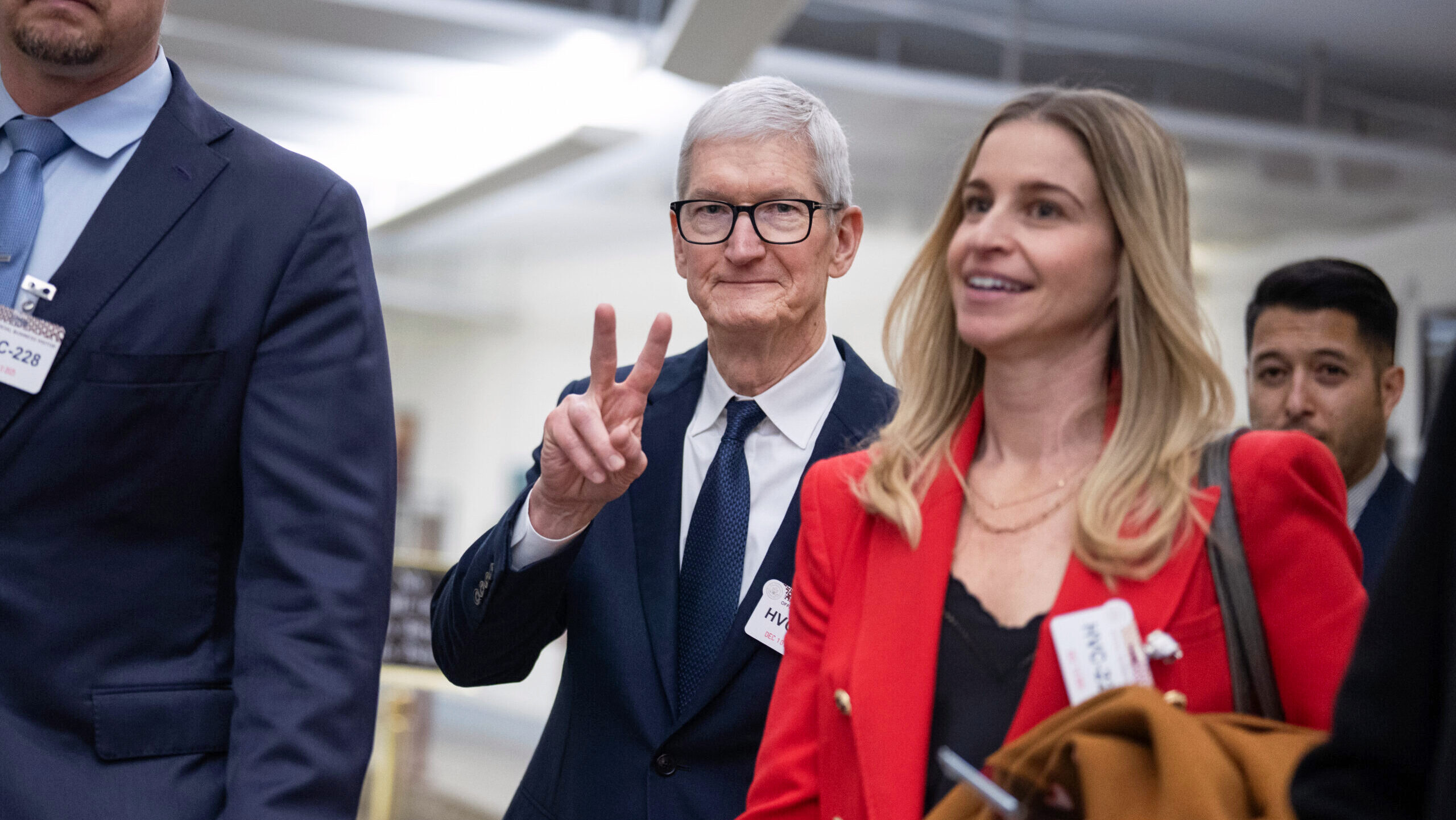
Outgoing Apple CEO Tim Cook isn’t slacking off during his final summer on the job.
On Wednesday, the iPhone maker formally announced a long-discussed $30 billion chip supply agreement with Broadcom, one of the biggest US manufacturing deals in company history. Apple shares climbed nearly 1% on the news, bringing it closer to reclaiming the crown for biggest US company by market cap.
Off to the Races
Nvidia’s lead has narrowed to about $300 billion this week amid an extended selloff in which the chips king has shed roughly $1 trillion in value since an all-time peak in mid-May. The remarkable slide, which Nvidia reversed somewhat with a 3% gain on Wednesday, has coincided with a broader market rethink of the artificial intelligence trade; semiconductors are largely out, white-hot memory and storage chips are in.
And so is Apple, whose shares have climbed more than 15% this year (exceeding the 9% gain of the broader S&P 500) as investors reward the company’s patient and cost-conscious approach to the AI era. The Broadcom deal also closes the loop of a Cook era perhaps best defined by the company’s bold and fruitful embrace of Chinese manufacturing. Now, in a new world of harder trade barriers, the Broadcom partnership kicks off an age of reshoring as the company vows to invest $600 billion in US manufacturing through the next four years:
- In particular, Broadcom will supply custom radio connectivity chips and components for various Apple devices. The deal, set to run through 2031, includes a $1.5 billion expansion of a Broadcom facility in Fort Collins, Colorado, which is now expected to produce 15 billion chips and support hundreds of jobs.
- Apple is simultaneously looking to reshore the primary logic chips powering its devices. It has already committed to buy chips from TSMC’s forthcoming Arizona chip fab, as well as from Intel.
“Apple has been working with the administration and businesses across the US to help create an end-to-end silicon supply chain in America, and today’s announcement advances those efforts,” the company said in a statement on Wednesday.
Not Out Yet: That’s not to say the company has completely abandoned its China-based supply chain. In fact, Apple has been lobbying Washington for clearance of memory-chip purchases from Chinese firm CXMT, which was blacklisted by the Pentagon, the Financial Times reported last month. The plea comes as Apple has raised prices on many of its key devices due to an AI-related crunch on memory and storage.