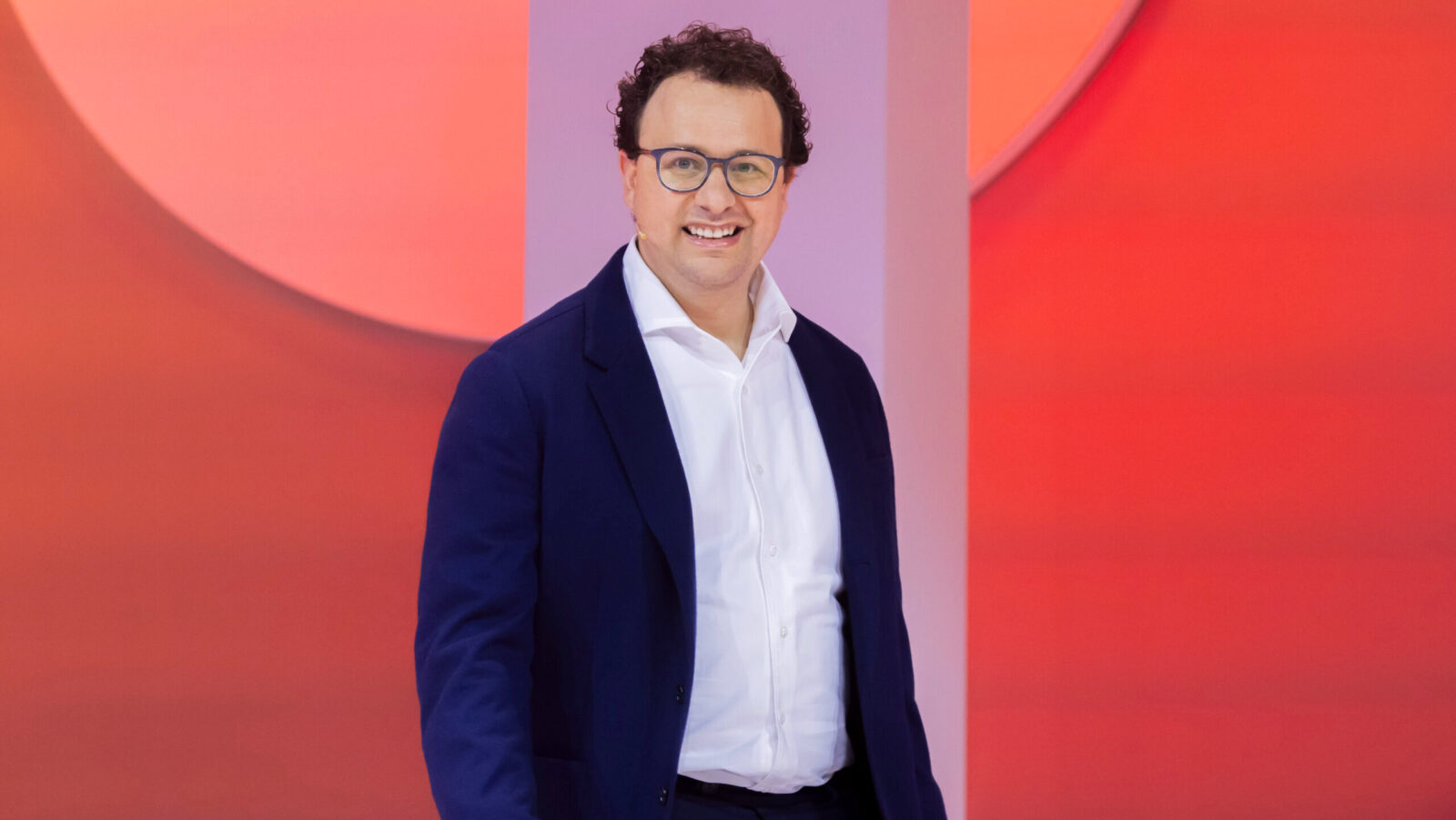
A Blank Slate: Jan van Eck Talks 20 Years of ETFs
While the CEO has seen countless funds and strategies come and go, the industry’s nowhere close to running out of ideas.
Sign up for exclusive news and analysis of the rapidly evolving ETF landscape.
Are you 1? Are you 2? Are you 3? Actually, never mind. We’d be here for a while.
VanEck’s ETF business turned 20 this month. Founded in 1955 by John van Eck as a mutual fund firm, the company entered the ETF market in 2006 with the launch of the VanEck Gold Miners ETF (GDX). Today, it manages more than 70 ETFs with roughly $165 billion in assets. Having entered the ETF space relatively early, John’s son and CEO Jan van Eck has watched countless funds and strategies come and go over the past two decades, some successful, others less so. Yet despite the industry’s maturity, he still sees plenty of room for innovation.
“Ten years ago, I really thought we were going to be running out of ideas,” he told ETF Upside. Instead, entirely new industries have continued to emerge, creating fresh opportunities for fund issuers. “We just launched a space ETF. That wouldn’t have existed five years ago. People weren’t thinking about data centers and returnable rockets. That inspires us. We’ve got a big pipeline.”
We caught up with van Eck on a video call to discuss the past, present and future of both the firm and the ETF industry as a whole. His desk was covered in reports and folders, one stack nearly a foot tall. “These are my macro outlooks,” he said. “I probably should just throw them all in the garbage, but every time I do quarterly investment outlooks and find good ideas, I put them in that pile.”
How have your investment strategies developed over the past 20 years?
Effectively, we have had two eras. We were kind of early in 2006 when we first got into ETFs, and that first decade saw us offering funds to parts of the market that didn’t have an ETF yet. The term was white space. There was no Russian ETF. There was no Vietnam ETF. We were early to munis and sectors of the economy others hadn’t gotten to. Also, sometimes the indices world isn’t really how investors think about the world. In the resources area, which is where we started, we looked at gold miners as very different from copper miners when some indices just lumped everything together.
The second era was more about taking existing asset classes, and if we thought we could improve exposure to them, we did. We have a high-yield bond strategy called Fallen Angel that only buys those bonds that started life as investment grade bonds and then got downgraded. It’s a great contrarian strategy because it ends up buying bonds when they’re under stress, and then when they recover, you get added return.
Which of your father’s philosophies continue to influence the business?
We always start with a blank slate and ask what asset classes we should be considering for portfolios given what’s happening in the world. Most Americans start by thinking, “We’re in a pro-business economy, so let’s just look at the United States, and of course we want to own equities, and blah blah blah.” [John had] a little bit more of a global perspective. If you’re a Venezuelan, you don’t want to just buy Venezuelan local market exposure; in fact, you want to get everything out of the country, so that informs how we think about things. When he started the company in 1955, just two companies had international stock funds, VanEck and Franklin Templeton [Franklin Resources at the time]. From a US perspective, it was innovative to have non-US equity exposure because Europe and Japan were growing after World War II. From a 10-year macro perspective, it’s not the most insightful, per se.
He became best known for switching his fund into a gold fund in 1968, which was really a big macro call that inflation was going to hit the US, and people should have gold in their portfolios to protect against it. It took a number of years, but he was patient. In 1971, gold delinked [from the US dollar] and went from $35 to $800 an ounce. In modern parlance, you could say those international equity and gold funds were the first thematic funds since everything else was US equities.
There are over 14,000 ETFs globally. Are there just too many? Do many seem focused more on headlines than actual investor returns?
There are definitely a lot of very niche ETFs. We tend to stay away from leveraged and inverse products because they don’t really perform in the medium- and long-term like what their names are. That’s just investor confusion risk. Single-stock ETFs aren’t for your average mom’s retirement account. Is it OK that there are some speculative individuals or hedge funds that like these kinds of exposures? Sure, I guess, but it’s not really mainstream. In our day-to-day work with advisors, we tend not to run across those kinds of strategies.
What’s a common investing strategy you think is going to look pretty goofy 10 years from now?
So many things in our industry are not really backed by science, but that, in a way, is the nature of finance. Financial markets reflect the world, and the world is always changing.
But if we picked one idea: The 60/40 portfolio. Billions and trillions of dollars are attached to this concept. If we’re looking at 10-year macro themes, one risk I see is similar to what my father talked about many decades ago, and that’s the amount of government spending in the US. We have so much debt. We borrow so much money. If the market loses confidence in our government’s ability to repay our obligations, then 10-year interest rates will go up, and you’ll really wish you didn’t have 40% of your portfolio in US bonds. It’s called a risk-free rate, but that’s a myth.
What will the next 20 years of VanEck’s ETF business and investing look like?
Expect us to expand in the private area, but not too much because private investments or hedge funds are not an economies-of-scale business where you want to be big so you can bring fees down. You want to focus on client returns, so usually those things can’t grow too big, otherwise the opportunity where you’re making those returns is swamped by the amount of money you’re managing.
I hope we continue to innovate. Technologies are constantly changing, so we’re investing a lot into research into crypto, blockchain and other areas that are radically reshaping how financial markets work.
In the medium-term, I think AI-assisted investing will become a much bigger thing. Individual investors have information and analytical ability at their fingertips that they didn’t used to. They’ll still use advisors, but maybe move some of their pocketbook to self-directed accounts.
Recent News





-
The Anthropic IPO is Almost Here. What Can Investors Learn from SpaceX?

Photo via Vincent Isore/ZUMAPRESS/Newscom