Wall Street Balks at TSMC’s $100 Billion Bet on Growing AI Demand
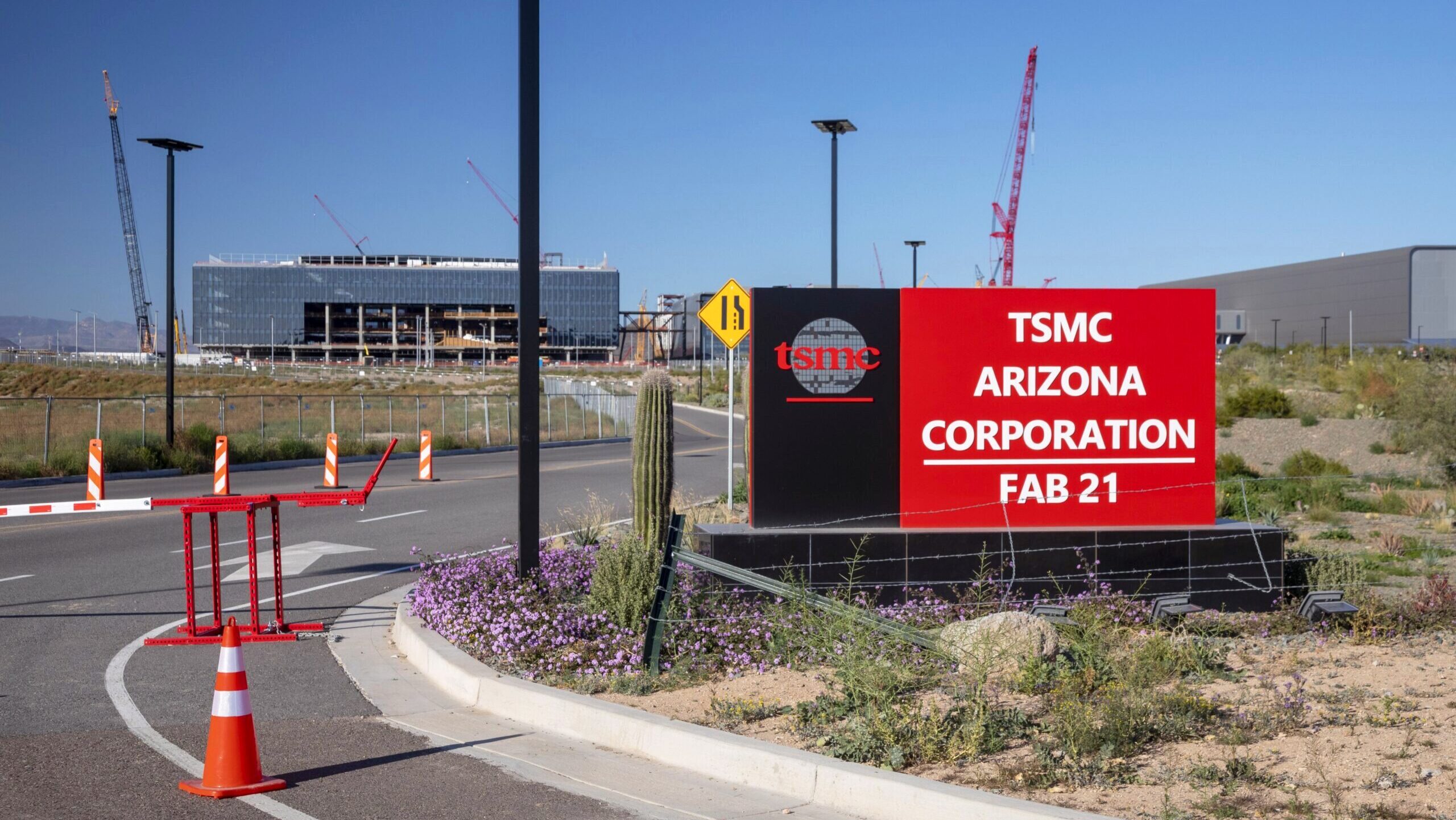
TSMC’s pledge to invest an extra $100 billion into its Arizona-based chip fab rekindled fears of overspending on artificial intelligence.
Sign up for smart news, insights, and analysis on the biggest financial stories of the day.

Wall Street has a new message for TSMC, straight out of The Godfather: Take the profits, leave the capex.
Despite announcing record revenue of $40 billion (beating expectations), net income of $22 billion (a 77% year-over-year increase) and beefed-up guidance for the rest of the year, US-listed shares of the premier semiconductor manufacturer still dropped more than 2% on Thursday following its second-quarter earnings call. Why? Because TSMC also pledged to invest an additional $100 billion (yes, billion) into its Arizona-based chip fab, igniting enough concern about AI over-investment on Wall Street to burn the rest of the sector with it.
Boom and Gloom
TSMC’s second-quarter figures were a sign that the AI buildout is still white hot; its forecast and capex plans were a sign that it sees no slowdown in sight. In fact, with the additional $100 billion, the company is now committing to a cumulative $265 billion investment in the US, the single largest foreign direct investment in history, CEO C.C. Wei said on an earnings call Thursday. And that’s not all. The company said it’s also planning more leading-edge chip packaging plants in its home country in the next few years. “Our conviction in the AI megatrend is very strong,” CFO Wendell Huang said. “The capex in the next three years will be even more, significantly higher than in the past three years.”
Wall Street, on the other hand, is fretting that the AI industry is hallucinating its projections for future AI compute demand. TSMC was just the tip of the selloff: Nvidia fell 2.4%; Arm, 5.4%; Micron, 5.6%: Marvell, 8.7%; and newly US-listed memory maker SK Hynix, more than 13%. The Philadelphia Stock Exchange Semiconductor Index slid 4.2%, more than lapping the 0.5% fall on the S&P 500 overall. Of course, the question of how low they can go is only relevant because they’ve already climbed so high:
- The chips sector now accounts for just under 20% of the S&P 500 by weight, according to LSEG Datastream figures, up from just 5% in 2022.
- Meanwhile, at least some of the selloff appears to be led by hedge funds cashing out their significant chip stakes. Goldman Sachs prime brokerage analysts said in a note this week that hedge funds’ net exposure to a basket of AI and chip stocks is now at its lowest level this year.
From Fab to Mag: So where will all that cashed-out capital flow? Possibly to the Magnificent Seven and hyperscaler stocks that have grown stagnant this year, Goldman’s note suggested. So that’s what the AI circle of life looks like.