Lockheed Martin, General Motors Join Forces to Rebuild America’s Arsenal
GM’s growth capacity has become strained in recent years, in part due to uncertainty around the future of electric vehicle demand.

Sign up for smart news, insights, and analysis on the biggest financial stories of the day.

Motor City is becoming Mortar City.
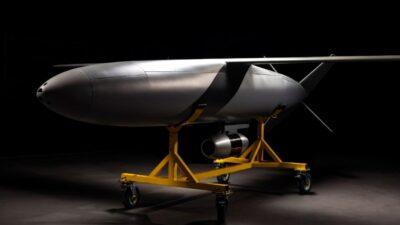
Lockheed Martin is teaming up with General Motors to “strengthen America’s manufacturing and defense industrial base, facilitated by the US Department of War,” the companies said in a statement Tuesday. The Wall Street Journal reported that GM is in talks to make parts for Lockheed Martin’s weapons and that the companies are still discussing which components the automaker could manufacture, citing people familiar with the matter.
Detroit’s Defense Roots
US weaponry stockpiles were insufficient before the war with Iran. But between the conflict in the Middle East, ongoing support of Ukraine and efforts to increase its ability to deter Chinese aggression toward Taiwan, the military faces an even more critical depletion. In April, senior defense officials in the Trump administration reportedly met with GM CEO Mary Barra and Ford Motor CEO Jim Farley to discuss the companies manufacturing weapons and military supplies.
The efforts to bring automakers into the weapons-making arena are reminiscent of World War II, when President Franklin D. Roosevelt tapped into the manufacturing might of car companies, including GM and Ford, giving Detroit the nickname “Arsenal of Democracy.”
More than 90 years later, new business is likely welcome at GM:
- GM’s growth capacity has become strained in recent years, in part due to uncertainty around the future of electric vehicle (EV) demand and competition in China from local rivals.
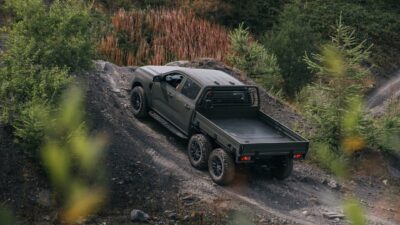
- The company made its return to military work in 2017 with GM Defense, and it certainly has the manufacturing capacity to contribute now.
Building Batteries: To compensate for slower-than-expected EV sales, General Motors jumped on the storage battery bandwagon last week, joining Ford, Tesla and other automakers. The company announced it is developing batteries for large-scale energy storage systems for major power users, an effort to take advantage of the expected growth of energy storage and data centers. Compared with dominant lithium-ion chemistry, “sodium ion-powered energy storage systems have the potential to operate without active cooling and with much less system complexity,” Kurt Kelty, GM’s vice president of battery and sustainability, wrote in a blog post. “In large energy storage systems, that matters.”