The SpaceX IPO Is About Way More Than Just Rocket Ships
Projections of massive growth for X (née Twitter), xAI and Starlink are all central to the lofty SpaceX IPO thesis.
Sign up for smart news, insights, and analysis on the biggest financial stories of the day.

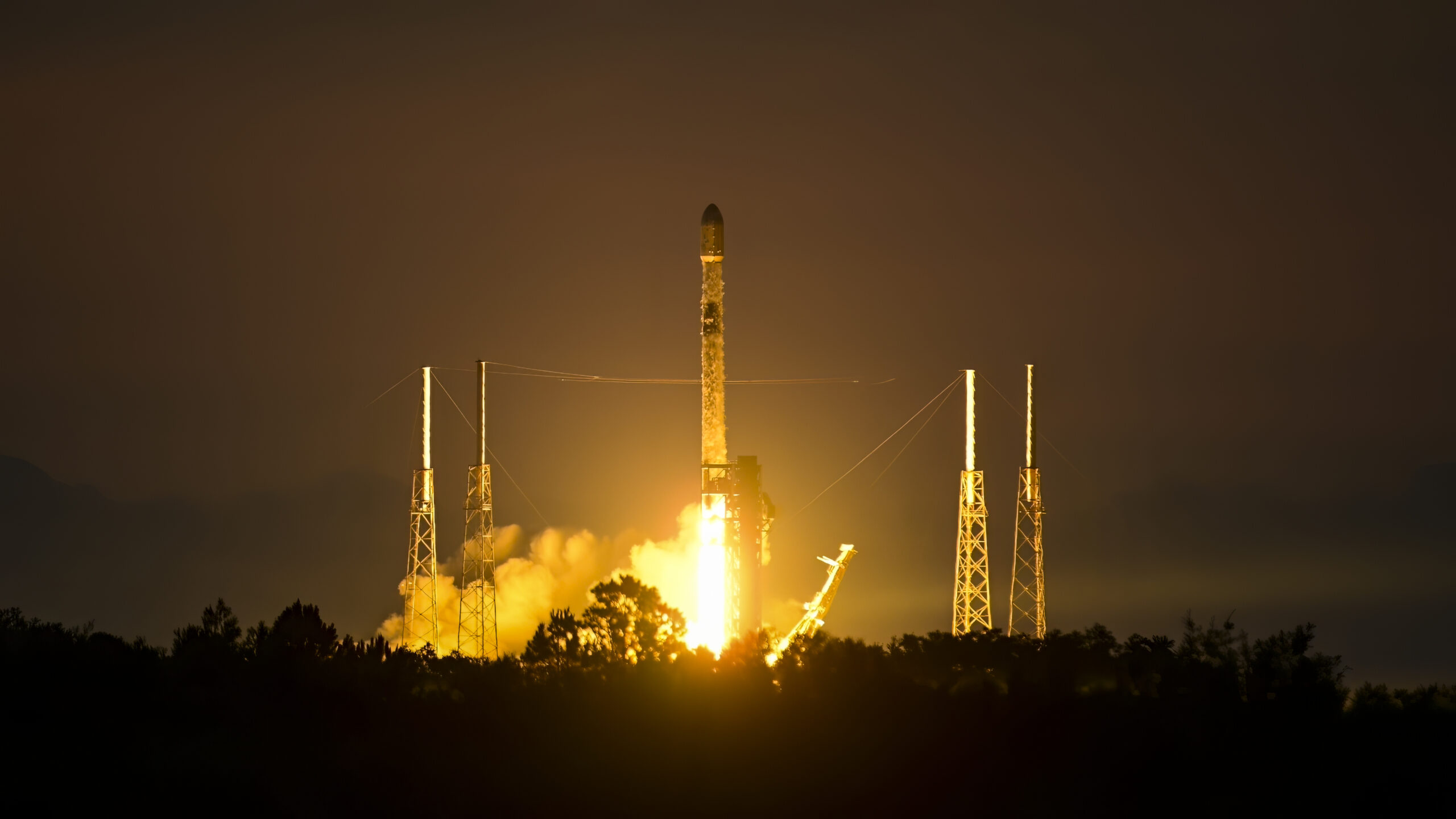
Close your eyes and think of SpaceX, and the image that comes to mind is likely the giant Starship rocket (unless a chainsaw-wielding Elon Musk still haunts your mind).
But the biggest IPO in history, scheduled for launch this Friday, is just as much about the unwieldy tech conglomerate bottled inside the rocket ship. To justify its $1.75 trillion valuation, the company is banking on X (née Twitter), xAI and Starlink to soar to the moon.
Critical Cargo
In its S-1 filing with the US Securities and Exchange Commission, SpaceX says it has “identified the largest actionable total addressable market (“TAM”) in human history,” worth $28.5 trillion. That’s a gargantuan figure for a company that generated $18.7 billion in revenue and a nearly $5 billion net loss last year. That TAM, SpaceX says, is divided up neatly and equally between its myriad units, divisions, and subsidiaries: “space-enabled solutions” accounts for $370 billion, current revenue driver Starlink accounts for $1.6 trillion, while AI accounts for … $26.5 trillion.
Ok, maybe not so equally.
The AI TAM is also further segmented: $2.4 trillion for AI infrastructure, $1.3 trillion in digital ads and consumer subscriptions and … $22.7 trillion in “enterprise applications.” You’re essentially betting that xAI’s Grok model will leapfrog competitors and emerge at the forefront of a future paradigm-shifting AI revolution. In the present, Grok’s relative underuse compared to rival models has allowed the company to rent out excess compute power. Grok’s biggest rivals are lining up as customers:
- Last month, rival Anthropic inked a deal to pay $1.25 billion per month (you thought your rent was high) through 2029 to be the sole tenant of Colossus 1, a.k.a. the world’s largest data center that xAI built in Memphis, Tennessee to train Grok back in 2024.
- Last week, Google followed suit, agreeing to pay $920 million per month for access to SpaceX data centers; the deal runs through September 2029, though both companies will have the ability to opt out starting next year, SpaceX said in a filing last week. Note: Google’s parent Alphabet is a longtime SpaceX investor and and one of its largest institutional investors, holding a roughly 6% stake in the company.
Goldman Sachs, the IPO’s lead investment bank, has recently pitched institutional investors on a vision of the company’s AI revenue ballooning to $322 billion by 2030, about 100x the division’s 2025 revenue. SpaceX, meanwhile, has pitched the creation of “orbital data centers” as another key growth channel.
Link Up: It wouldn’t be the first time SpaceX grounded itself in the sturdy economics of operating as a futuristic utilities player. Starlink accounted for more than 60% of all SpaceX revenue last year, and Third Bridge sector analyst John Conca told The Daily Upside it is reasonable to expect its subscriber base of mostly rural clients could grow from around 12 million to around 30 million as it matures into a true wireless alternative with the further development of “direct-to-device” technology. Telecom companies are taking notice; last month, Verizon, AT&T and T-Mobile formed a joint venture to employ satellites to address rural coverage gaps. In the meantime, Conca said that Starship remains the biggest inhibitor of Starlink’s ceiling. The same could be said for any plans for orbital data centers. Maybe the SpaceX IPO is all about the rocket ships after all.