OpenAI Doubles Agentic User Base as Cheaper Chinese Models Threaten US Dominance
Bloomberg reported that the mega AI startup is set to announce that its two agentic tools are now serving around 10 million users.
Sign up for smart news, insights, and analysis on the biggest financial stories of the day.

Who says OpenAI lacks agency?
On Tuesday, Bloomberg reported that the mega AI startup is set to announce that its two agentic tools, Codex and ChatGPT Work, are now serving about 10 million users, or double the number from earlier this month. The timing of the big reveal isn’t exactly surprising; the company’s much-awaited IPO has seemingly stalled as competitive open-weight models from overseas grab market share in the US. Whether the US market will remain open forever is another, suddenly pressing, question.
Great Codex-pectations
In March, leaders at OpenAI reportedly urged staff to abandon “side quests” (RIP, video-generator Sora) in favor of money-making agentic coding and enterprise tools amid rising competition. Back then, the company’s main concern was the rapidly rising Anthropic, whose Claude Code and Claude Cowork tools fueled tokenmaxxing.
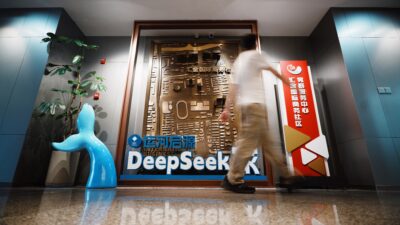
Whether the new figures place OpenAI in the lead is unclear, but both companies are facing a much more existential threat: open-weight and open-source Chinese models from the likes of Moonshot, Alibaba and DeepSeek, which have sucked up roughly half of US enterprise token usage by proving nearly as powerful and far less expensive. The AI Race is now sparking a policy debate over AI protectionism in Washington … and Beijing:
- The White House is reportedly divided over AI protectionism, according to recent reports from Axios, The Wall Street Journal and others. Protectionist policymakers worry about the competitive threat of cheaper models and warn that open-source AI (which can be downloaded and tweaked) poses a safety and national security threat; opponents warn that walling off Chinese models could dampen the domestic industry’s competitive edge.
- Meanwhile, Reuters reported earlier this month that policymakers in Beijing, who often tout AI as a “public good,” are increasingly viewing China-made open-weight models as a critical national asset and considering strict limits on overseas access.
Meet in the Lobby: Reuters also reported that Beijing and Washington are still planning an AI-focused summit in September. In the meantime, OpenAI and Anthropic are spending big to make sure their voices are heard. Together, the two spent nearly $3.2 million on DC lobbyists in the second quarter, up 23% from the previous quarter, according to recently released federal filings.