Can $2 Billion Startup Generalist AI Solve the Robot Training Conundrum?
Training the AI robots that can interact in the physical world requires a gargantuan set of relevant training data that doesn’t yet exist.
Sign up for smart news, insights, and analysis on the biggest financial stories of the day.

Jack of all trades or a master of one? For now, robots should probably just learn how to dust the house without accidentally smashing the flat-screen TV.
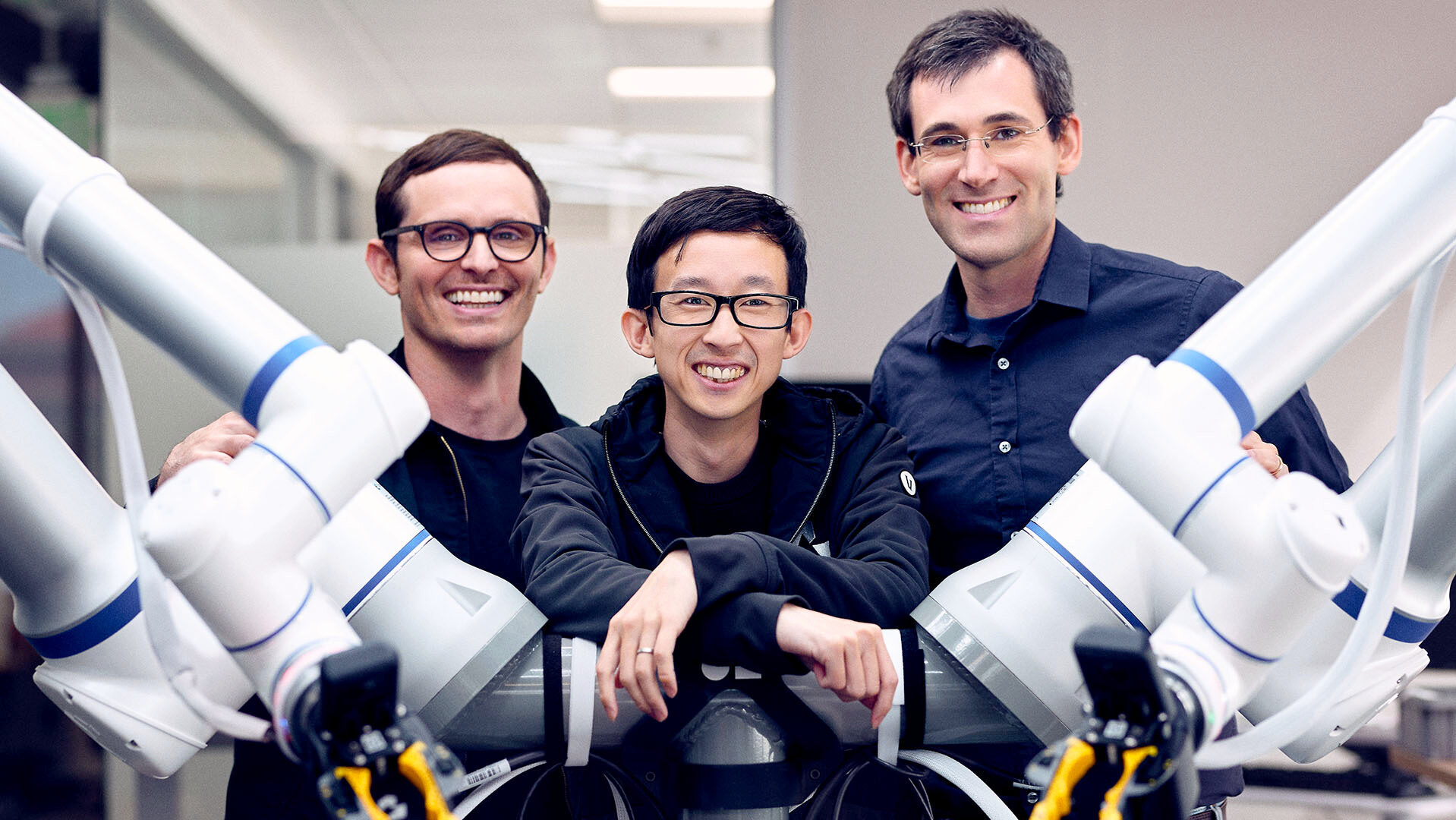
But accomplishing that is hardly automatic. Last week, Nvidia- and Jeff Bezos-backed robotics software startup Generalist AI raised $400 million (at a nifty $2 billion valuation) to help build its AI-for-robots system. Their trick for training the robot army of tomorrow? An army of humans today.
Get a Grip
Training AI chatbots required downloading all of humanity’s printed history. Training AI robots to interact in the physical world requires a similarly gargantuan set of training data. The only problem? The dataset for physical-world interaction and navigation is theoretically much more complex than language. Oh, and it doesn’t really exist.
For Generalist AI, the solution is to make the data itself. The company is doing so by way of what it calls “grippers,” a sort of dummy-prototype version of its flagship robotic hands that real-life humans can wear like gloves and puppeteer. It has sent thousands of grippers to humans around the world, who are wearing the gloves while accomplishing simple tasks like tying zip ties and opening bags of chips; the goal is to create 500,000 hours worth of real-world data, the company told Bloomberg last week.
It’s just one of many solutions robotics companies have recently devised to solve the data bottleneck:
- Rhoda AI, which raised $450 million at a $1.7 billion valuation in March, has turned to another source: publicly available videos online. It’s no wonder that, so far, robots’ most impressive skill seems to be choreographed dancing.
- Human Archive, a startup and member of Y Combinator’s Winter 2026 class, is mounting head-cams on gig economy workers to collect first-person-point-of-view videos to train robots.
Vibe Shift: The schemes don’t end there. Last week, New York City-based company Shift went viral with a promotional video promising to send humans to clean your messy apartment for free … so long as it can record the whole process and send the video to its German-based parent company, MicroAGI. Which begs the question: Will MicroAGI eventually clean our apartments for free, too?
Recent News





-

Photo illustration by Connor Lin / The Daily Upside