Is CoreWeave’s Tapestry of Debt Unraveling?
CoreWeave’s credit swaps were priced at a nerve-rattling 60% chance of default on Thursday, according to ICE Data Services.
Sign up for smart news, insights, and analysis on the biggest financial stories of the day.

Here’s three words that nobody likes to see connected to bad news: credit default swaps.
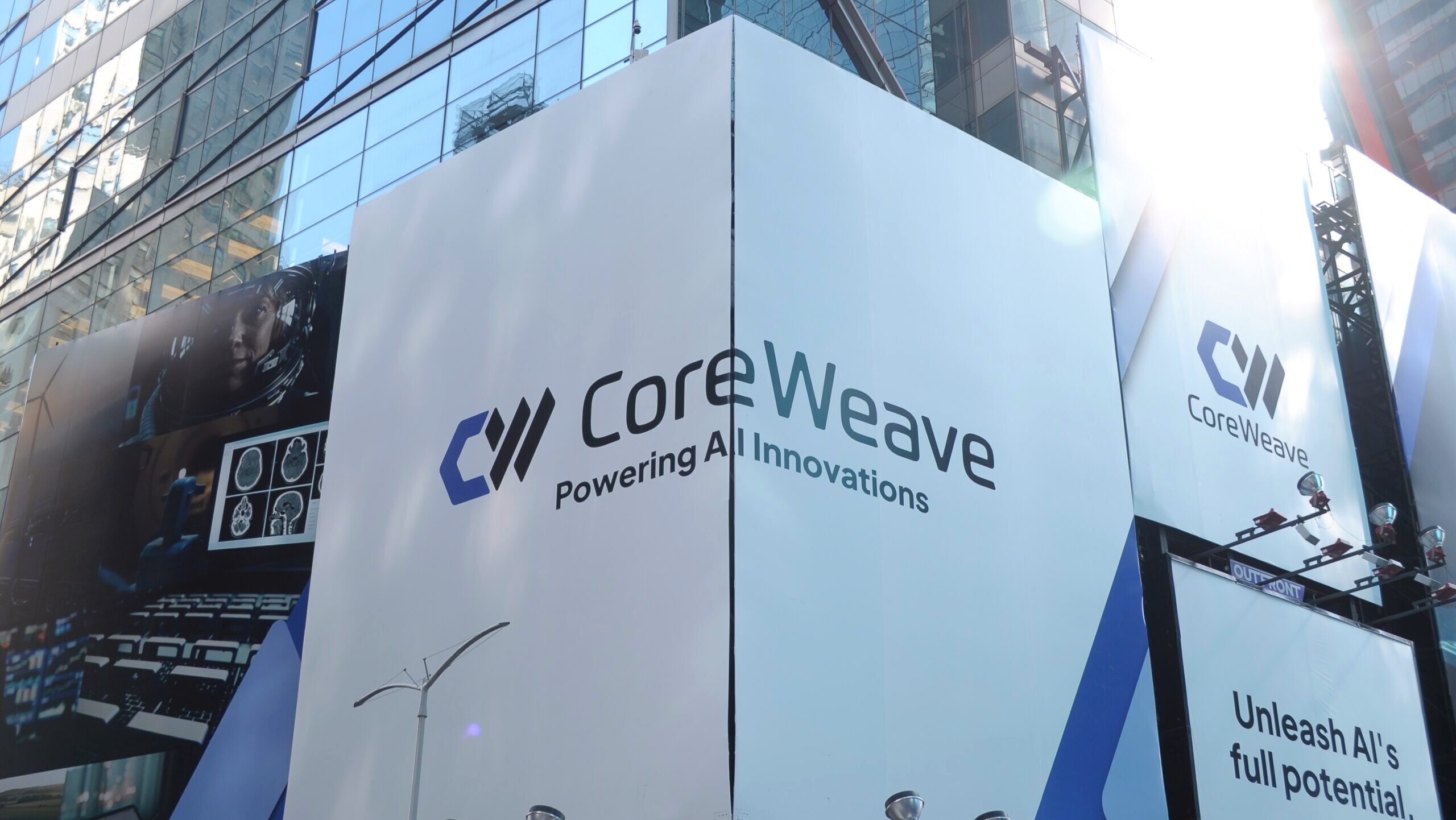
The financial derivatives at the heart of 2008’s housing market meltdown that allow investors to transfer credit risk to another party are back in the news again thanks to CoreWeave, a former crypto miner turned “neocloud” compute provider. Yields on portions of the company’s massive pile of junk-rated bonds have risen to a stunning 15%, and its credit swaps were priced at a nerve-rattling 60% chance of default on Thursday, according to ICE Data Services. Shares of the company have plummeted some 16% in the past week, dragging down much of the AI-and-chips trade with it.
A $5 Trillion Gap
The timing and scale of the AI build-out boom has left many neoclouds crushed between the rising prices for GPUs and the rising cost of capital. Since its pivot into cloud computing in 2019, CoreWeave has leaned hard into debt-heavy financing structures (including many massive loans backed by its own chips), resulting in some $50 billion in debt and other liabilities en route to bringing 51 data centers online.
The company must now convince credit investors it can earn enough cash to meet its costly obligation, and its most recent quarterly results highlight its bind: revenue increased 112% year over year to nearly $2.6 billion, though its net loss widened by 115% to $626 million in large part due to ballooning interest expenses. The spending is far from over, too: Analysts expect about $50 billion in annual capex from CoreWeave from 2027 through the end of the decade. Still, the company has some big names in its corner that suggest some level of stability, even if its current woes are indicative of the, let’s just say unfavorable, arithmetic faced by the neocloud industry writ large:
- In April, Meta agreed to expand its contract commitments with CoreWeave to $35 billion through 2032, while OpenAI has committed to around $22 billion in total across various contracts that run through the next few years, and the company reportedly has major deals with both Microsoft and Anthropic. Meanwhile Nvidia, which backed CoreWeave in fundraising rounds, has agreed to buy any excess compute through April 2032; Nvidia CEO Jensen Huang said Thursday he is “optimistic” that the neocloud player will not need backstopping.
- Analysts at Gartner have a slightly more apocalyptic outlook, writing in a report published Wednesday that data center operators will need $8.5 trillion to cover their costs through 2030, while total enterprise and consumer AI revenue will only reach $3.6 trillion over the same period. That will “force over 80% of neocloud providers to cease independent operations,” the analysts wrote.
Glass Quarter Full: Not helping soothe anxieties are leaks out of Anthropic’s recent IPO pitch meetings with investors, which revealed revenue of “only” $16.8 billion in the third quarter. That equates to a growth rate of “only” 45% from the previous quarter, a massive slowdown from the 140% growth seen in Q2. That begs the questions: Which quarter was the outlier, and do either warrant a $2 trillion valuation?