Jensen Huang’s Affair Renews Debate on Chips Export Controls
Congress is mulling three different export control measures to include in the annual defense authorization bill for fiscal year 2027.
Sign up for smart news, insights, and analysis on the biggest financial stories of the day.

It’s been a big week in foreign affairs.
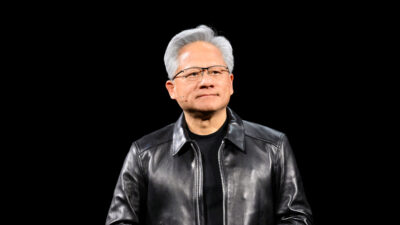
With news of Nvidia CEO Jensen Huang’s dalliance with a suspected Chinese spy, Washington seems determined to close loopholes and tighten export controls to China for America’s high-powered AI semiconductors. The beltway’s China hawks may just have an unexpected ally: Beijing, which seems equally determined to wean China’s AI industry off of America’s chips.
Tinker, Tailor, Smuggler, Spy
America’s foreign policymakers have arrived at a rough consensus across two presidential administrations now: Keep Chinese tech firms hooked on lower-tier chips, such as Nvidia’s H200, but keep top-tier chips strictly off limits. But playing chip traffic cop would be tough even if the world’s top chip seller weren’t entangled in a plot ripped out of a Robert Ludlum novel.
A recent Bloomberg review of Chinese regulator documents shows that top Chinese open-weight AI lab Moonshot gained access to a massive trove of top Nvidia chips this summer. AI research firm SemiAnalysis told the outlet that it estimates that hundreds of thousands of chips worth billions of dollars — a big enough stockpile to fill a few hyperscaler facilities — have slipped past export controllers into China. At least as common as outright smuggling is the practice of Chinese firms renting compute space from data centers across Southeast Asia that had legitimately sourced Nvidia’s best chips (as is alleged in Huang’s current scandal).
Beijing, which aims to develop an independent chip designing-and-fabbing ecosystem of its own, is now cracking down about as hard as DC is:
- About 600,000 Nvidia H200 chips are currently collecting dust in a Hong Kong warehouse awaiting clearance from Beijing, which has imposed strict import controls on the tech, according to a Reuters report last week. Sources also told Reuters that major Chinese tech companies have been able to secure approval for only around 10,000 chips each in recent months.
- The Financial Times, meanwhile, reported earlier this month that a $7 billion cloud computing deal between Oracle and Chinese AI giant Tencent was recently scuttled after both companies felt the heat from their respective regulators. Under the deal, Oracle was set to provide Tencent with access to 100,000 advanced AI chips by way of data centers across Southeast Asia.
MATCH Makers: In Washington, Congress is mulling three different export control measures to include in the annual defense authorization bill for fiscal year 2027 — the AI Overwatch Act, the Chips Security Act, and the MATCH Act — while policymakers at the Commerce Department are exploring ways to close the remote access loophole, according to a report on Monday from The Information. Nvidia, meanwhile, had been telling data center partners in recent months to sell no more than 49% of cloud computing services to Chinese clients, sources told the Financial Times in a story published this month before details of Huang’s affair were made public. Seems like the company may have been smelling some looming bad PR (and a little love) in the air.