Amazon Hogs the Road As Freight Speeds Toward the Future
The company is opening up its less-than-truckload service to all businesses, letting anyone reserve space by the pallet in its trucks.
Sign up for smart news, insights, and analysis on the biggest financial stories of the day.

Big rigs are expected to bring in big money for the companies building the trucks and the ones managing what’s in them and who drives them — if anyone does at all.
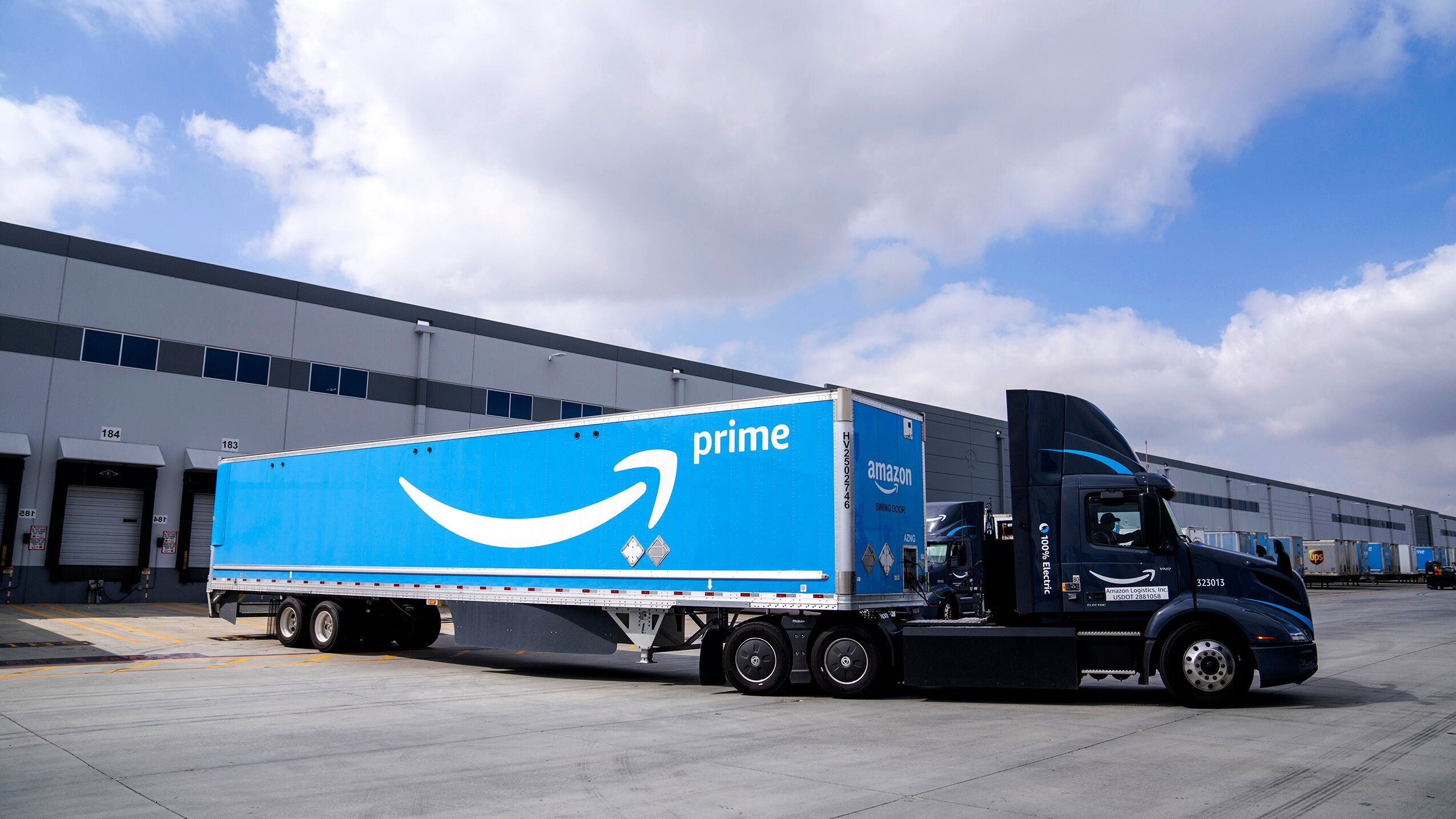
Amazon yesterday announced it’s opening up its less-than-truckload services to all businesses, letting any company reserve space by the pallet in its freight trucks. Stocks of shipping companies like UPS and FedEx fell after the announcement. Amazon already dominates the last mile, with its local drivers out-delivering UPS, FedEx and USPS in terms of volume, ShipMatrix found. Now it wants the miles before that.
Ghost Trucks Incoming
Third-party logistics as a global market is worth more than $1.3 trillion, estimated Armstrong & Associates. Amazon’s been buying up trucks to own more of the road, and its Amazon Relay service acts as an Uber-style app for truck drivers to book gigs.
But with truck-driving facing a persistent labor shortage, two of Amazon’s partners yesterday pressed the pedal down on a driverless future:
- Volvo, which has supplied heavy-duty electric trucks to Amazon in the past, laid out yesterday ambitious expectations for its autonomous truck biz. The vehicle-maker said it expects to start putting robo-trucks on US roads within months and have 300 trucks operating stateside by the end of next year. Volvo’s aiming to bring in $3 billion from its autonomous biz in five years.
- Also yesterday, autonomous trucking company Einride saw its stock upshift nearly 90% after going public on the Nasdaq. The acceleration was so aggressive that Nasdaq put a temporary pause on trading the newbie stock. Einride has a fleet of 200 autonomous trucks on the road that ferry heavy loads for clients including PepsiCo and Heineken; in April, it struck a deal to supply 75 manually operated electric trucks to Amazon.
Freight-eningly Good: Amazon’s shipping has gotten so fast that customers can wait to order TP until their last roll. Now, it’s turning its logistical expertise into a business that third parties that don’t sell on its platform can pay for, last month launching its Supply Chain Services biz to do just that. The move could mirror what it did with Amazon Web Services, turning the cloud it built for itself into a thriving part of its business.
Recent News





-

Photo illustration by Connor Lin / The Daily Upside, Photo via Chelsea Blair/Sipa USA/Newscom