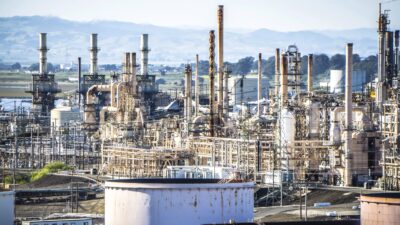
Slashing Crude Costs, Saudi Arabia Signals Brewing Price War
International benchmark Brent crude stood at roughly $72 per barrel on Monday, barely above pre-war levels.
Sign up for smart news, insights, and analysis on the biggest financial stories of the day.

After briefly topping $126 a barrel in April amid the US-Iran conflict, Brent crude prices have fallen faster than an Acme anvil destined for Wile E. Coyote’s head.
International benchmark Brent stood at roughly $72 per barrel on Monday, barely above pre-war levels. Ongoing negotiations for a permanent end to the conflict, which would stabilize shipping in the Persian Gulf, have oil-producing nations bracing for potential oversupply. Experts say it also means a price war may be in the offing.
The Price War Is Right
In late April, the United Arab Emirates announced its exit from OPEC, the world-leading energy cartel, signaling it would ignore production quotas. The country’s output hit a record 3.8 million barrels per day last month.
Saudi Arabia, OPEC’s largest producer, is traditionally seen as a mediator in global oil markets, using its large share of global supply to stabilize prices. But that doesn’t mean it’s above a price war, having tangled with Russia in 2020 and joined an OPEC attack on US shale producers in the mid-2010s.
On Monday, the Kingdom’s state producer Saudi Aramco slashed its light crude price to Asia for August by $11, the biggest month-over-month reduction this century. A day earlier, six OPEC+ members joined the Kingdom in raising output by 188,000 barrels per day starting next month, the fifth consecutive month of hikes:
- “It is increasingly looking like the Gulf producers are gearing up for a price war,” Robert Yawger of Mizuho wrote Monday.
- Soojin Kim, a commodities analyst at MUFG, said prices remain in “contango,” with spot or near-term futures prices cheaper than longer-term futures as a result of lots of supply. “Gulf producers are expected to lower official selling prices further,” she wrote.
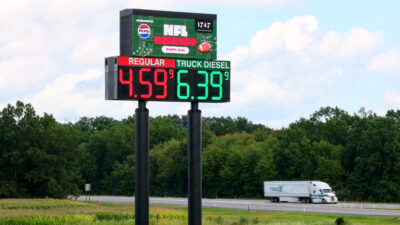
What Goes Up: Maritime News said Monday that 108 vessels crossed the Strait of Hormuz from July 3 to July 5, with 43 on Friday alone, indicating the world’s most crucial oil chokepoint may be returning to normal. As it has reopened, US gas prices have fallen beyond analysts’ wildest dreams: A gallon went for an average $3.79 on Monday, according to AAA data, compared with its May 21 peak of $4.56.
Recent News


-
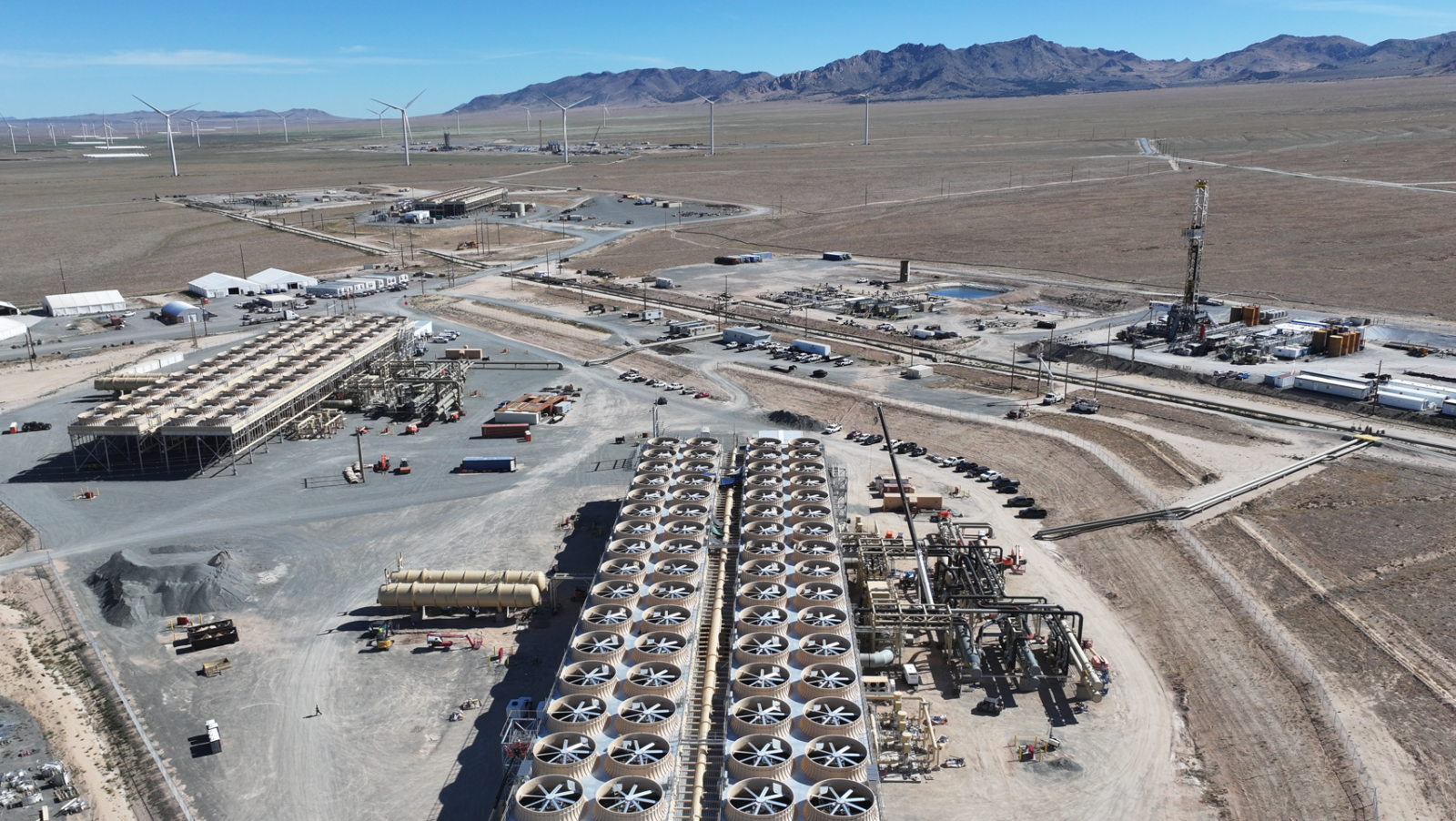
Bill Gates-Backed Fervo Energy Joins Firms Profiting From Data Center Buildout

Photo via Fervo Energy
-

Photo illustration by Connor Lin / The Daily Upside