‘Love Is Inflation-Proof’: Americans Shrug Off Record-High Wedding Costs
Inflation, an uninvited wedding guest, is rising even faster for marriage costs than the rest of the economy. So far, couples aren’t balking.
Sign up for smart news, insights, and analysis on the biggest financial stories of the day.

Anyone whose vacation budget is already blown, thanks to tuxedo rentals, bridesmaid dresses destined for the back of the closet and airfare to the Chicago suburbs (substitute your childhood home here), knows that it’s peak wedding season.
More than three-quarters of the year’s marriage ceremonies occur between May and October, according to wedding-planning website The Knot. Over the course of the year, the US wedding industrial complex will make more than $100 billion from millions of couples.
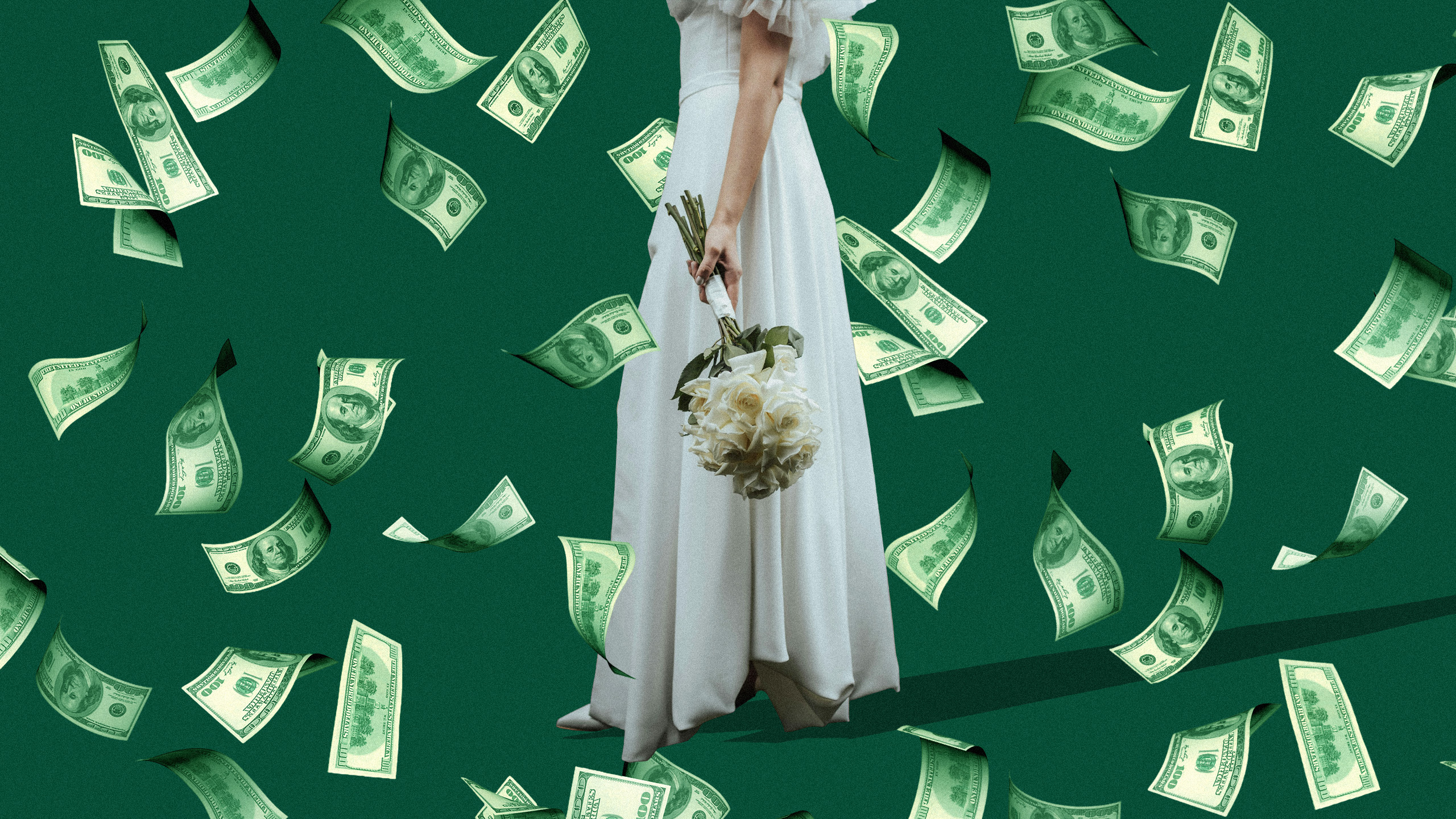
While wedding costs are rising at more than twice the pace of broader inflation, couples so far haven’t balked at splurging on their big days. An analysis by the Bank of America Institute found that wedding costs climbed 8.5% annually through May. The price of a wedding has continued to inch up year by year even as to-be-wed couples (and their guests) grapple with the suffocating embrace of a tight economy and cascading layoffs.
Last year, average wedding costs reached a record $36,000, and this year they’re holding steady at that all-time high, according to marriage planning site Zola. That average covers a wide range of weddings, from intimate $10,000 shindigs to $100,000+ celebrations, and Esther Lee, editorial director for The Knot, said costs in some areas of the US (like NYC and LA) grew more than in others.
Flora Euphoria
The climbing cost of walking down the aisle doesn’t necessarily mean couples are balling out more. They might feel instead like they’re engaged in a high-dollar skimping exercise. In other words, they’re getting less bang for their buck. Broad-based inflation hit 4.2% in May, its highest level in more than three years, lifting the prices of everything from venues (a couple’s biggest expense on their big day) to food and flowers. Nearly eight in 10 couples told Zola they were concerned that the economy, and tariffs in particular, could push their bill beyond their budget.
Tariffs have had a direct impact on some wedding must-haves, particularly flowers: The US imports the majority of its cut flowers from Colombia and Ecuador, both of which have faced steep levies. Couples are spending an average of more than $6,000 on flowers and decor this year, per Zola, and The Knot found florals typically eat up 10% of a wedding budget. Couples expecting anything near the floral extravaganza of Cassie and Nate’s wedding in Euphoria’s final season will need to set aside more.
If your taste runs to food rather than flora, don’t hold your breath expecting a break. Chocolate fountains, for instance, are considerably more expensive than in years past, with cocoa costs roughly double their historical average, thanks in part to climate-related risks.
Nonetheless, “Couples are continuing to view their weddings as non-negotiable investments,” Lee told The Daily Upside. The majority of couples who told The Knot they adjusted their wedding plans in response to the economy last year did so by increasing their spending, not cutting it.
‘Marry Me, Juliet’
“Love is inflation-proof,” Bank of America Institute economist Taylor Bowley told the Daily Upside. Bowley notes that consumers are trading down in some areas of their budget (dollar stores and fast food joints have seen this trend play out in their earnings) but continue to splurge on weddings.
The reason people are willing to spend more on their big day than on several years of Big Macs may go beyond viewing it as one of the most important days of their lives:
- Zola found that just under half of couples boosted their budgets to match a vibe or trend they discovered online. The online wedding planner also said spending on flowers and decor has been driven up by social media trends, including over-the-top flower arches. Celebs’ social accounts have an outsized impact. The elaborate floral arrangements for Sofia Richie’s 2023 marriage to Elliott Grainge, for instance, started a trend of splurging on phalaenopsis orchids.
- The Knot predicted Taylor Swift and Travis Kelce’s wedding this month at Madison Square Garden will inspire couples to spend an extra $2.2 billion globally over the next two years. So far, the couple has kept the July 3 affair hush-hush, but even without much intel, The Knot saw a pronounced surge in vendor searches on its site the day after.
Still, social media is not reality, and the vast majority of brides and grooms aren’t billionaire pop stars. “Spacing out celebrations is a current trend we are seeing. Couples are choosing to get legally married at a low-stress courthouse ceremony during the week, then holding a larger, casual party or dinner later on, allowing them to bypass peak venue rental rates,” Lee said. To afford their must-haves, like a more expensive venue or a late-night In-N-Out Burger truck rental, Lee said couples are also opting for pre-loved dresses and engagement rings set with less expensive lab-grown diamonds.
White Dress vs. White Picket Fence
Any money saved seems to go straight back into other aspects of the wedding, though: The Knot found couples are spending more on standout elements like customized menus and booking unique vendors including analog photographers and on-site tattoo artists.
When it comes to paying for the big day, nearly nine in 10 couples pay for their own weddings either in full (29%) or in part (59%). They use a mix of savings, monthly income and credit cards, and a quarter of couples are asking guests to help pay for their petit-filet dinners by including cash funds in their registries.
Bowley said wage growth has caught up to inflation, helping couples better afford the weddings of their dreams. At the same time, the K-shaped economy has been closing in recent months as wage growth for the lowest-income workers matches that of the highest earners. That could mean both sides of the spectrum can spend more on their big day and that data’s reflecting more than just the biggest spenders splurging.
While couples may be better prepared to afford their perfect day as wages rise, putting it all together still requires sacrifices for many. Nearly six in 10 couples told The Knot they’re postponing buying a home to prioritize their wedding. In other words, inflation has pushed the worth of a (wedding) picture from a mere 1,000 words to roughly the equivalent of a mortgage down payment.
Recent News

-

Photo illustration by Connor Lin / The Daily Upside